
Mudroom Magic: Designing the Perfect Entry Zone
There's a particular kind of chaos that lives just inside the front door of most Kiwi homes. Wet jackets dripping onto the floorboards. School bags piled on top of dirty rugby boots and wet togs. An excited dog who's just discovered the puddle behind the garage. And a hallway carpet doing its best to absorb it all. The solution to the madness? A mudroom.
A mudroom is a dedicated entry zone built to swallow up the mess from outside before it makes it into the house. It’s frankly one of the most useful upgrades any home can have. Especially in NZ with our love of the outdoors. Whether it’s muddy boots in winter or sandy jandals in summer, the mudroom isn’t a luxury, it's a survival tool.
Here's how to design one that actually works.
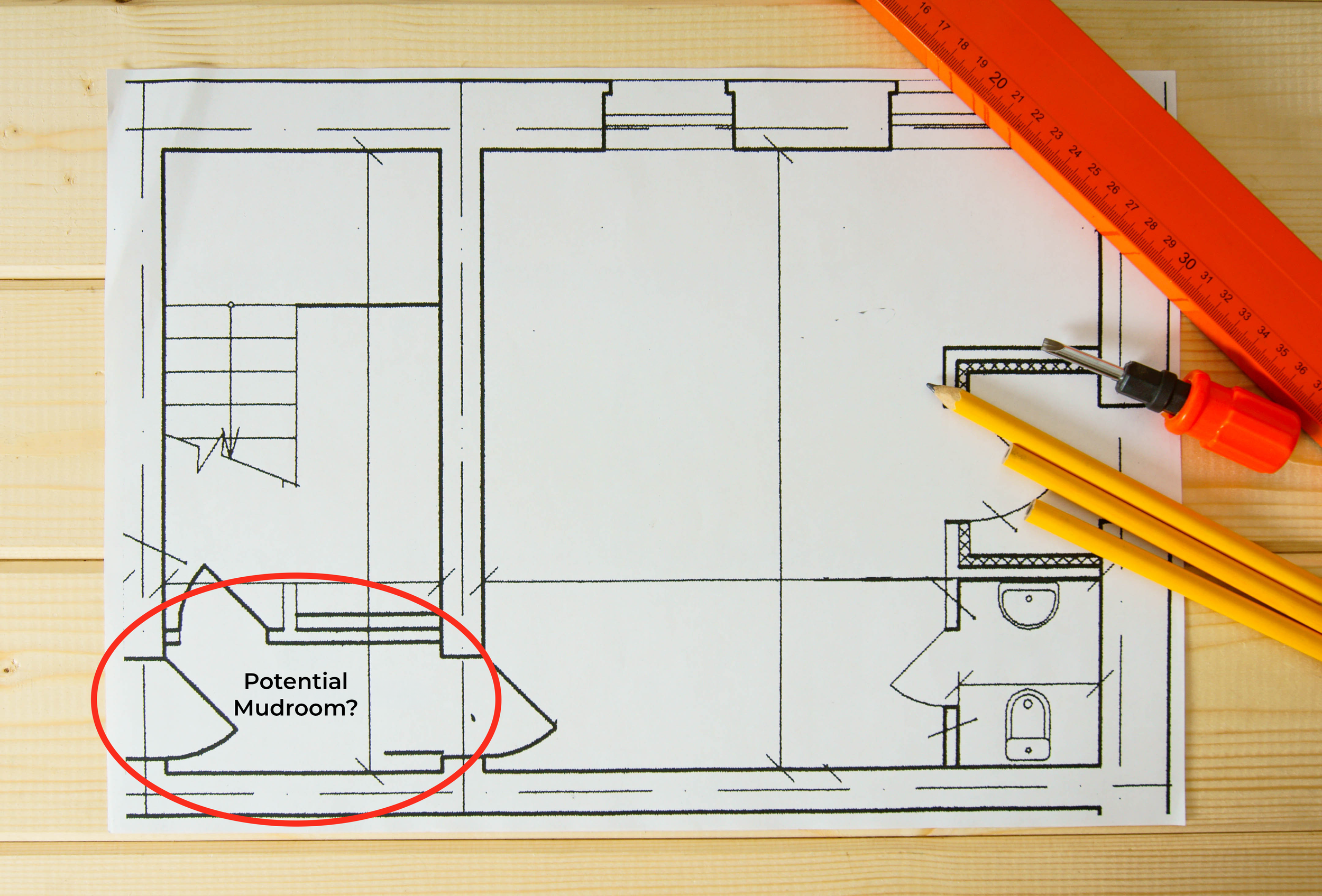
Start with the space you've already got
Most New Zealand homes don't have a mudroom. What they do have, more often than not, is one of these:
A short hallway between the garage and the kitchen
A wide section of wall in the laundry
An awkward corner inside the back door
The end of a passage that currently holds nothing but a wonky coat hook
Any of these will do. A functional mudroom can be built into as little as 1.2 metres of wall. The only caveat is that it has to be part of one of the entrances to the house.
The trick to creating a compact yet functional mudroom is designing the joinery so that the bench, storage, and hanging space all work together as one tight, integrated unit. Fortunately this is made possible by Cutshop’s® custom-cut panels.
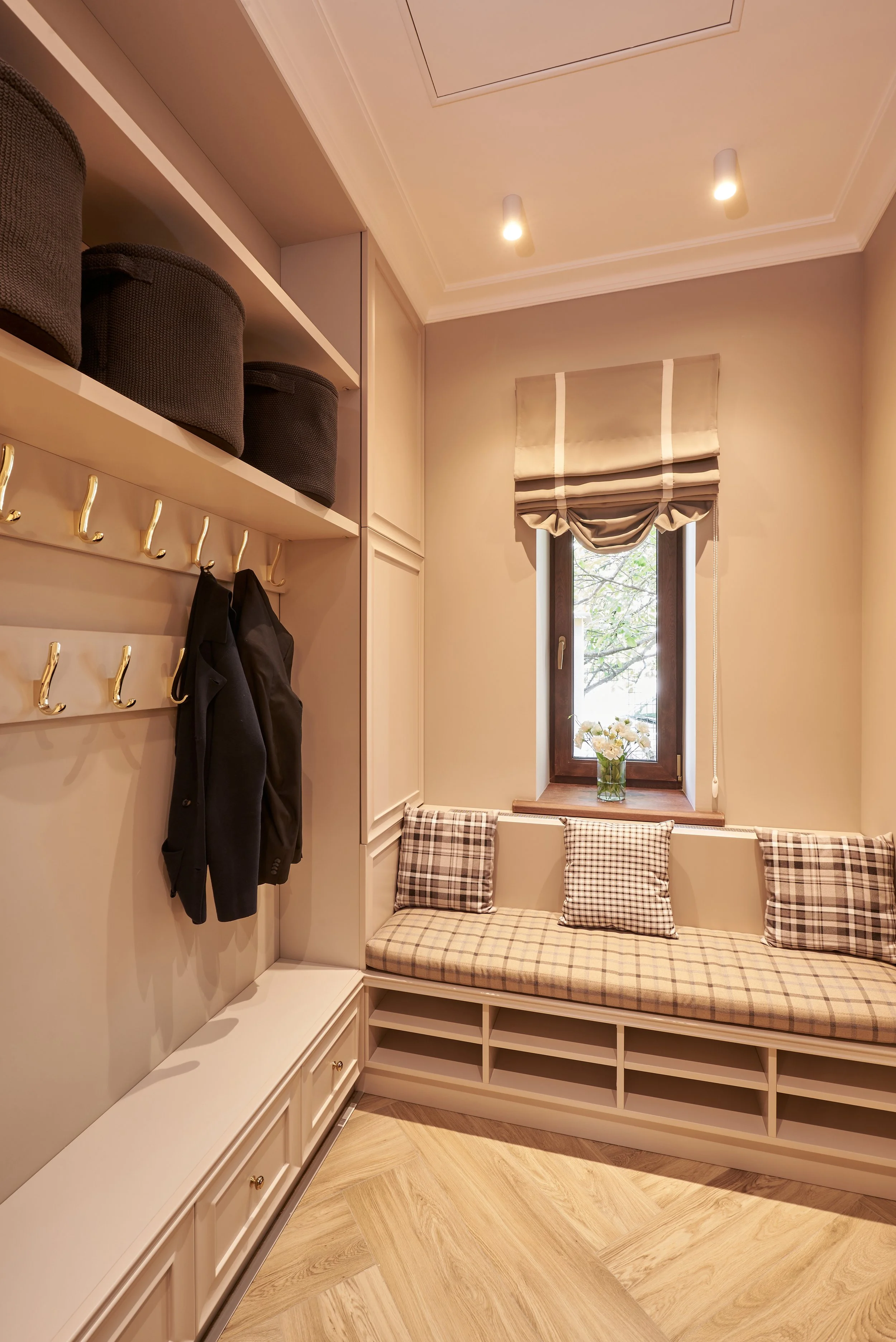
The bench seat is non-negotiable
Every good mudroom revolves around a bench. It's where boots come off, where bags get dropped, and where small humans sit while you wrestle their gumboots on. Build it around 450mm deep, 450mm high, and as long as the wall allows.
Underneath the bench is prime real estate. The two best options are:
Tip-out shoe drawers, hinged at the bottom, that swing forward to reveal angled shelves inside. They look like a single panel from the front, but each one swallows three or four pairs of boots.
Deep pull-out drawers with full-extension runners, ideal for sports gear, helmets, or a labelled basket per family member.
Whichever you choose, a moisture-resistant material is recommended to provide wipeable surfaces that won’t deteriorate quickly. Wet socks and toddlers don't respect timber.
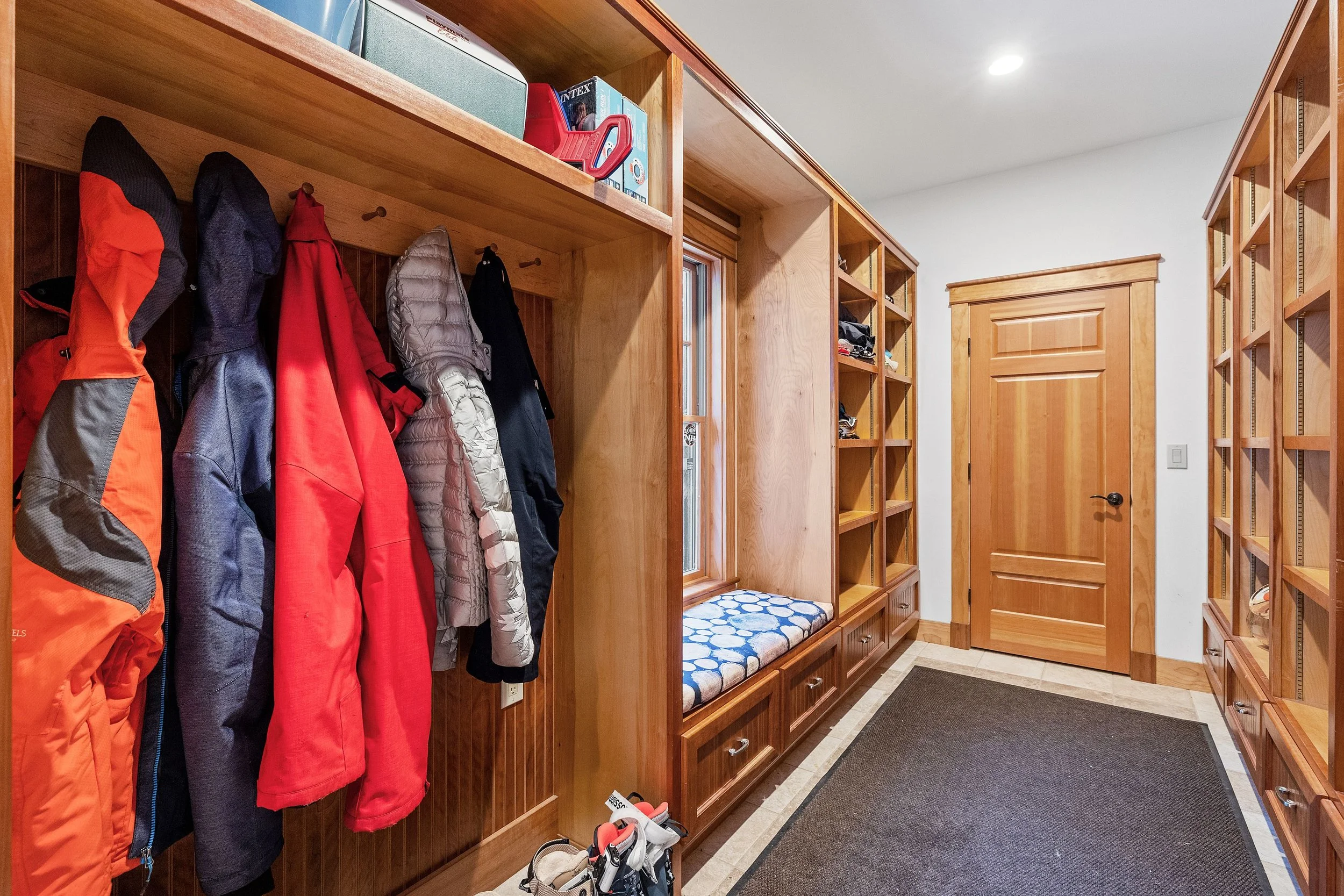
Give every family member their own cubby
Above the bench, individual locker-style cubbies are the key to household harmony. Each person gets one tall, open-fronted column, roughly 350–400 mm wide, with:
A double coat hook at the top for a jacket and a school bag
A narrow shelf above for hats, helmets, or a soccer ball
A removable basket at the bottom for sunscreen or dog leads
Open cubbies beat doors here. They're faster to use, easier to keep tidy, and force a little accountability, there's nowhere to hide a damp hoodie. If you'd rather have something more streamlined, swap the open fronts for slatted panels or perforated MDF, which still allow airflow but soften the visual clutter.
Build in somewhere to dry wet gear (your future self will thank you)
Wet jackets, towels and school uniforms have to go somewhere and draping them over the bench defeats the point of having one. The simplest solution is to build a tall, narrow cupboard beside the lockers (about 300 mm wide) with a clothes rail running across the inside near the top. Wet jackets hang in the cupboard rather than out in the open, and the door keeps the visual mess hidden. Leave a small vent gap at the top and bottom of the door so air can move through and gear actually dries.
Pick materials that won't sulk in winter
This is where a lot of mudrooms fall over. Standard MDF will swell. Untreated ply will warp. The wrong finish will lift at the edges within a season.
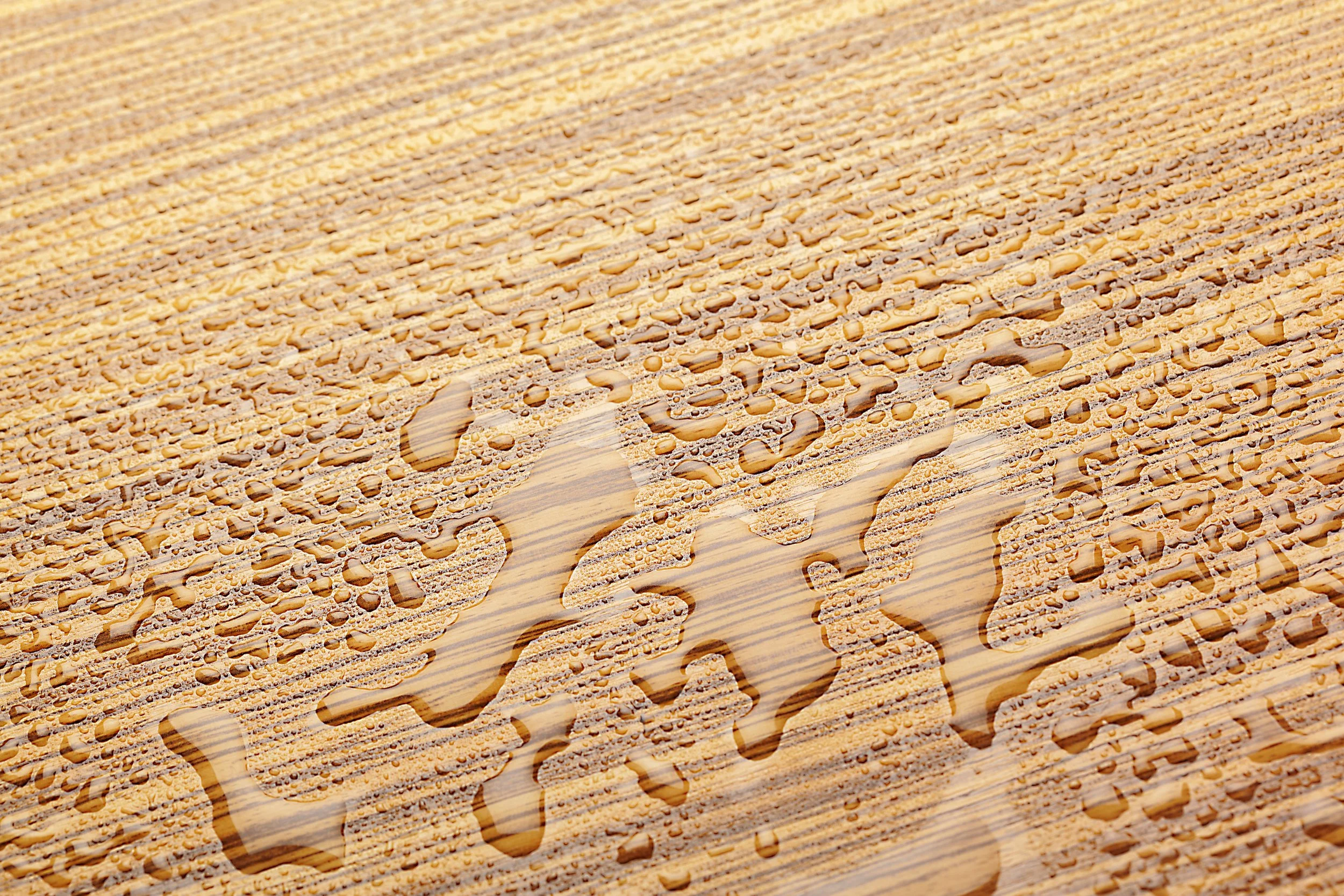
For a mudroom, your material list should include:
Moisture-resistant (MR) MDF for cabinets and shelves. Strong, stable, and happy to live near wet gear.
Melamine or laminate-faced board for bench tops, locker panels, and any surface that needs to be wiped down. Easy to clean, resistant to scuffs, and available in dozens of finishes.
HPL (High Pressure Laminate) if you want a step up in durability, particularly on edges and high-wear zones.
Painted MR MDF if you want a soft, joinery-style finish that suits a villa or heritage home.
Tip: Whatever you choose, ask for ABS edging on every exposed edge: it's the single best protection against moisture creeping into the panel core.
Bringing it all together
A good mudroom isn't really about square metres. It's about how precisely the joinery fits your space, your gear, and your family's daily rhythm. That's where Cutshop® comes in. Send through your measurements and our CNC machines will cut every panel to the millimetre, bench, lockers, drying cabinet and all, ready for you to build at home.
We’re coming into winter and the rain isn't going anywhere, now is the time to get your mudroom project underway.
