
Ditch the Bedside Table. Here's What to Build Instead.
There's a particular kind of furniture that almost everyone owns and almost no one is happy with: the bedside table.
It's too small. It's the wrong height. It wobbles when you reach for your phone. There's a gap between it and the bed, another gap between it and the wall, and a charging cable that snakes across both. You've lived with it for years because it functions (although barely) and replacing it has never felt urgent enough to actually do anything about.
The problem is that your bedside table is a freestanding piece of furniture trying to do a built-in job.
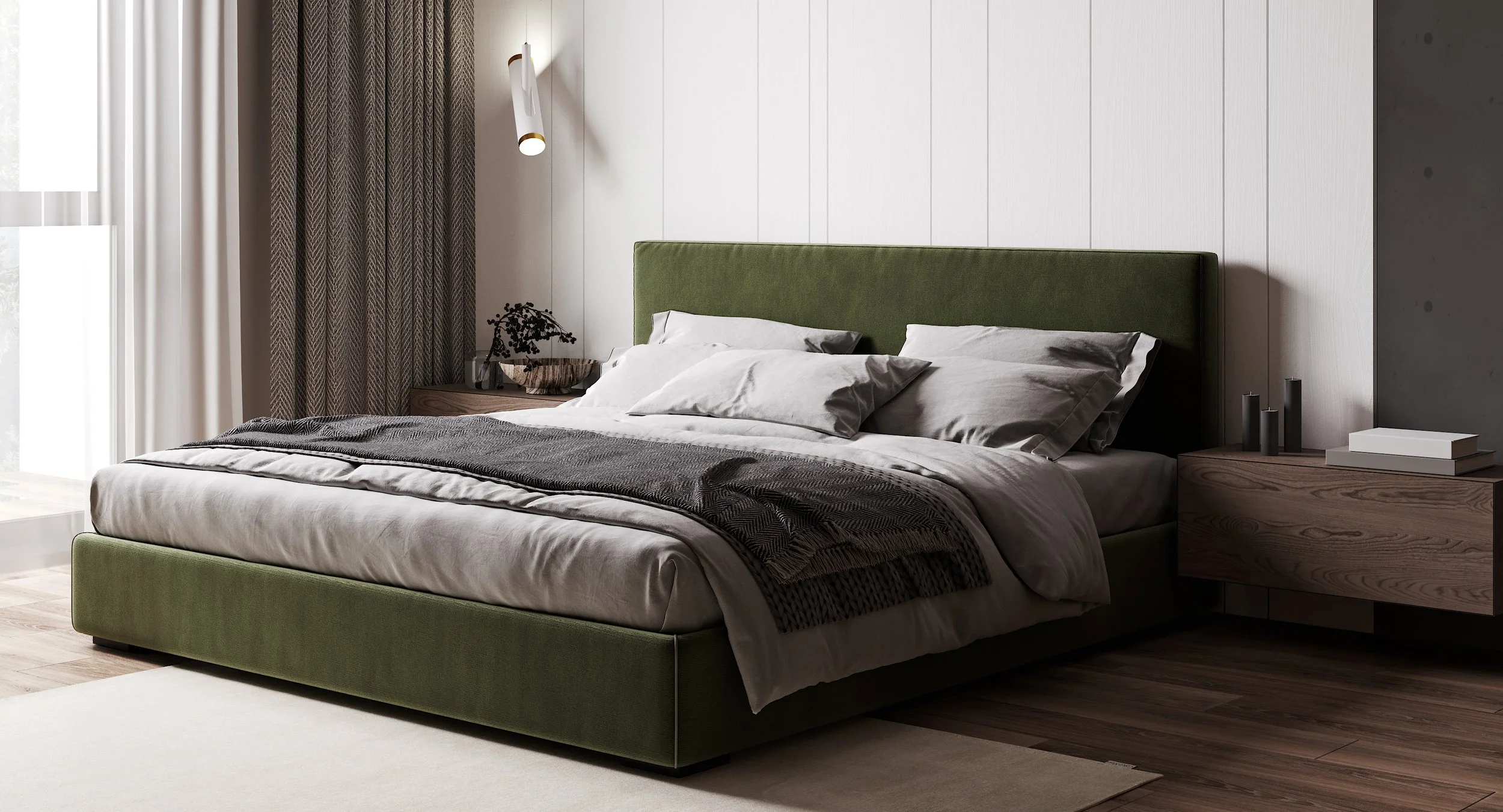
A custom-built headboard panel with integrated bedside cabinetry solves this. Everything sits flush and fits the space exactly. With precision-cut flat-pack panels from Cutshop®, it's also one of the most achievable bedroom upgrades you can take on.
Why Does Freestanding Furniture Always Fall Short in the Bedroom?
Because bedrooms aren't designed around furniture catalogues. They're designed around beds, and beds come in fixed sizes that don’t play nicely with walls, alcoves, or the space either side of them.
A standard queen bed (1530mm wide) sitting against a 3600mm wall leaves 1035mm to play with: roughly 517mm on each side. Most bedside tables are 450–500mm wide. So you're left with a small gap on one side, or a unit that overhangs, or one that's slightly too narrow and looks lost. None of these are right.
Custom-built cabinetry works from your actual measurements outward. The units are sized to fill the available space exactly, the surfaces sit at the correct height for your specific mattress, and the headboard panel spans the full width of the wall behind the bed. The result isn't furniture in a room. It's a room that's been properly fitted out.
What Are Your Options?
There's a range of approaches depending on how much of the wall you want to work with and how much storage you actually need.
Here are the three worth knowing about:
Floating Shelf Units
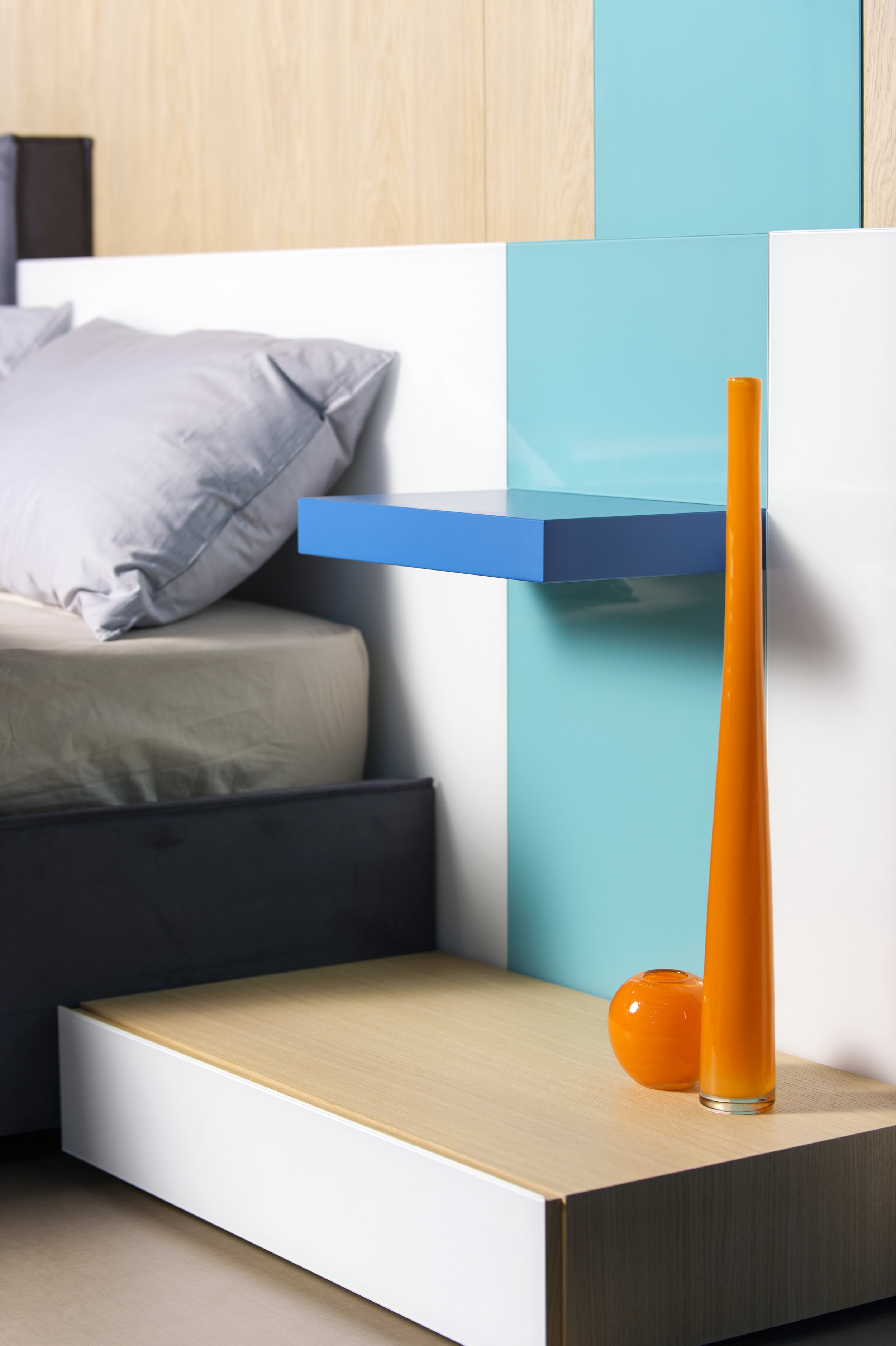
The most minimal option, and often the sharpest-looking. A pair of wall-hung shelf panels, positioned at mattress height on either side of the bed, with a small drawer unit below each one. No legs, no floor contact, nothing for dust to collect under. The surface holds a lamp and whatever else lives on your bedside table. The drawer handles the essentials.
This works particularly well in a modern bedroom where the priority is a clean, uncluttered look rather than significant storage. Because the shelves are wall-mounted and cut to your exact width, they sit level with the bed without any of the awkward height mismatches you get with freestanding furniture.
Cabinet Units With Drawers
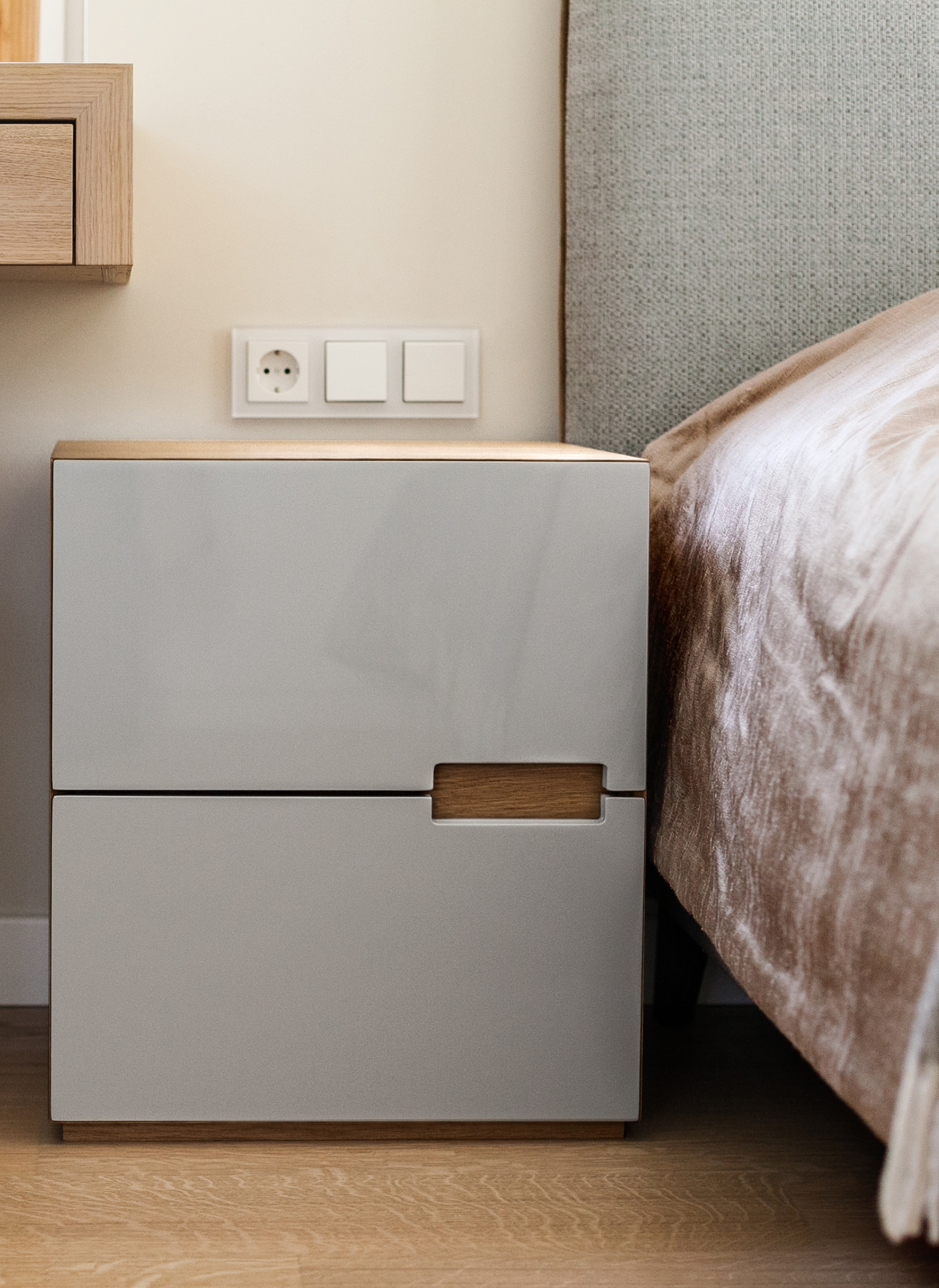
For anyone who needs more storage, this is the workhorse option. A carcass unit on each side of the bed, built to exactly the right height, with two drawers on full-extension soft-close runners and a small open shelf below for books or a basket.
The drawer sizing matters here. A shallow top drawer (100–120mm deep) is ideal for the small items that actually live on a bedside table. A deeper bottom drawer handles bulkier items.
Tip: Size the drawers around what actually goes in them, not around what looks proportional from the outside.
Where this configuration really earns its place is in bedrooms with alcoves. If your bed sits in a recessed bay, custom cabinet units sized to fill the alcove exactly, right to the wall on both sides, create a fitted look that no premade unit can replicate.
Full-Height Headboard With Integrated Bedside Units
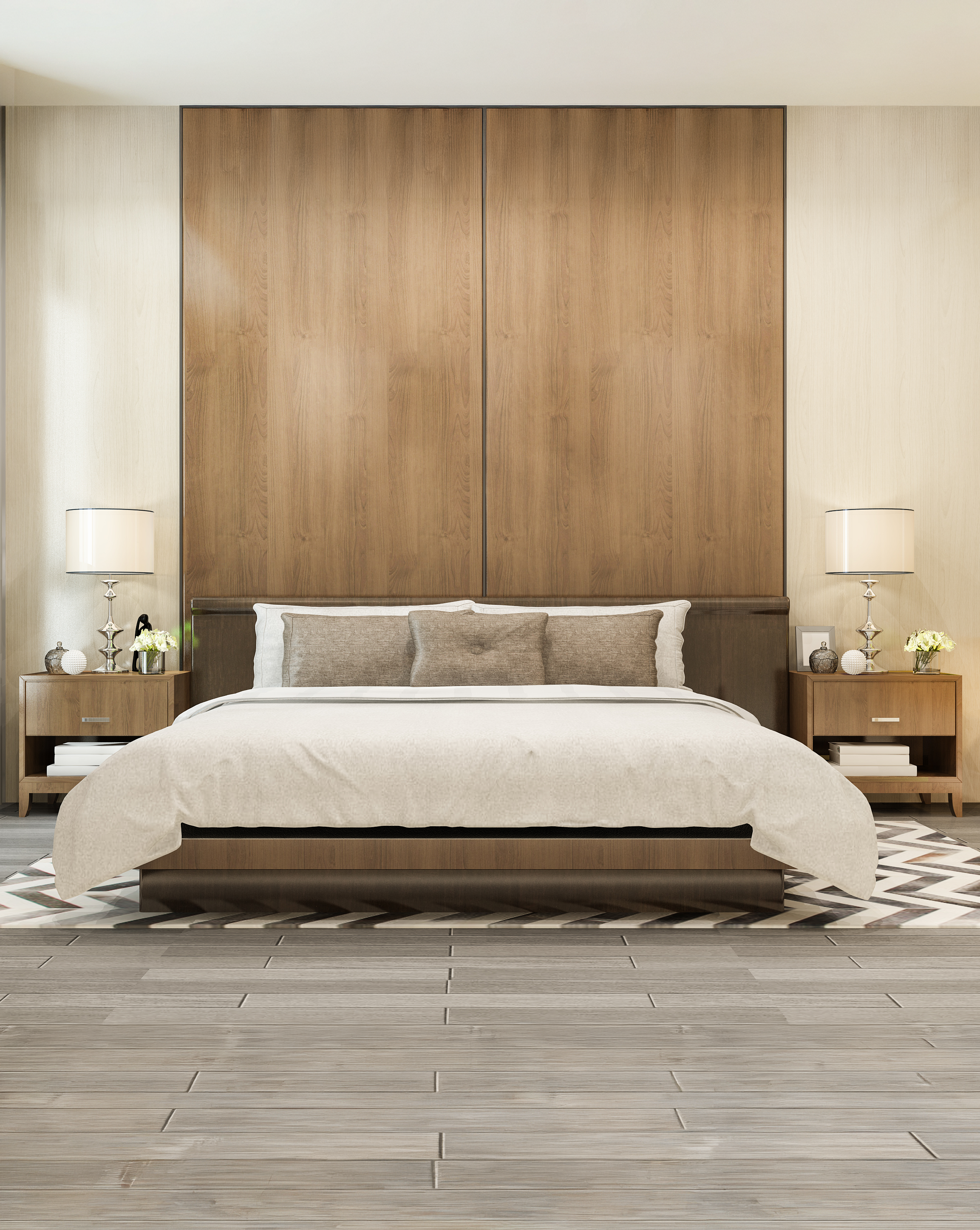
This is the configuration that transforms a bedroom. A floor-to-ceiling panel running the full width of the bed wall, with built-in bedside cabinets at each end, a recessed section behind the bed head, and open shelving above. Done well, it makes the bedroom look professionally designed and more like a space that was considered from the start.
The practical benefits are significant too. Overhead shelving replaces a separate bookshelf. Integrated LED strip lighting along the top of the headboard panel handles bedside reading without a lamp eating up surface space. A recessed charging station on each bedside surface keeps cables completely hidden.
This is achievable for far less than most people expect, and it's a build that adds real value to a property because it looks architectural rather than added-on.

What Design Details Are Worth Getting Right?
Surface height
This is the most important measurement in the whole build. Measure from the floor to the top of your made bed — mattress, topper, and all — and build your bedside surface to that height. Too low and you're reaching down for your phone every night. Too high and the proportions of the whole setup look wrong. Get this right first.
Cable management
Plan it before the cabinetry goes in. A small drilled hole through the back panel of each bedside unit, lined up with the wall socket behind, keeps charging cables completely hidden from day one. It takes thirty seconds to include at the design stage and saves years of annoyance afterward.
Headboard panel proportion
For most NZ homes with standard 2400mm ceilings, a headboard panel that reaches 1200–1400mm above the mattress surface hits the right proportion. Any higher and it starts to feel heavy. A floating gap of 50–80mm between the bottom of the headboard panel and the mattress top gives the build a lightness that makes the whole thing look more considered.
Symmetry
Whatever you build on the left side, build on the right. It sounds obvious, but it's worth stating: mismatched bedside units, even subtly different ones, read as assembled rather than designed. One configuration, both sides, consistent hardware throughout.
What Materials Work Best?
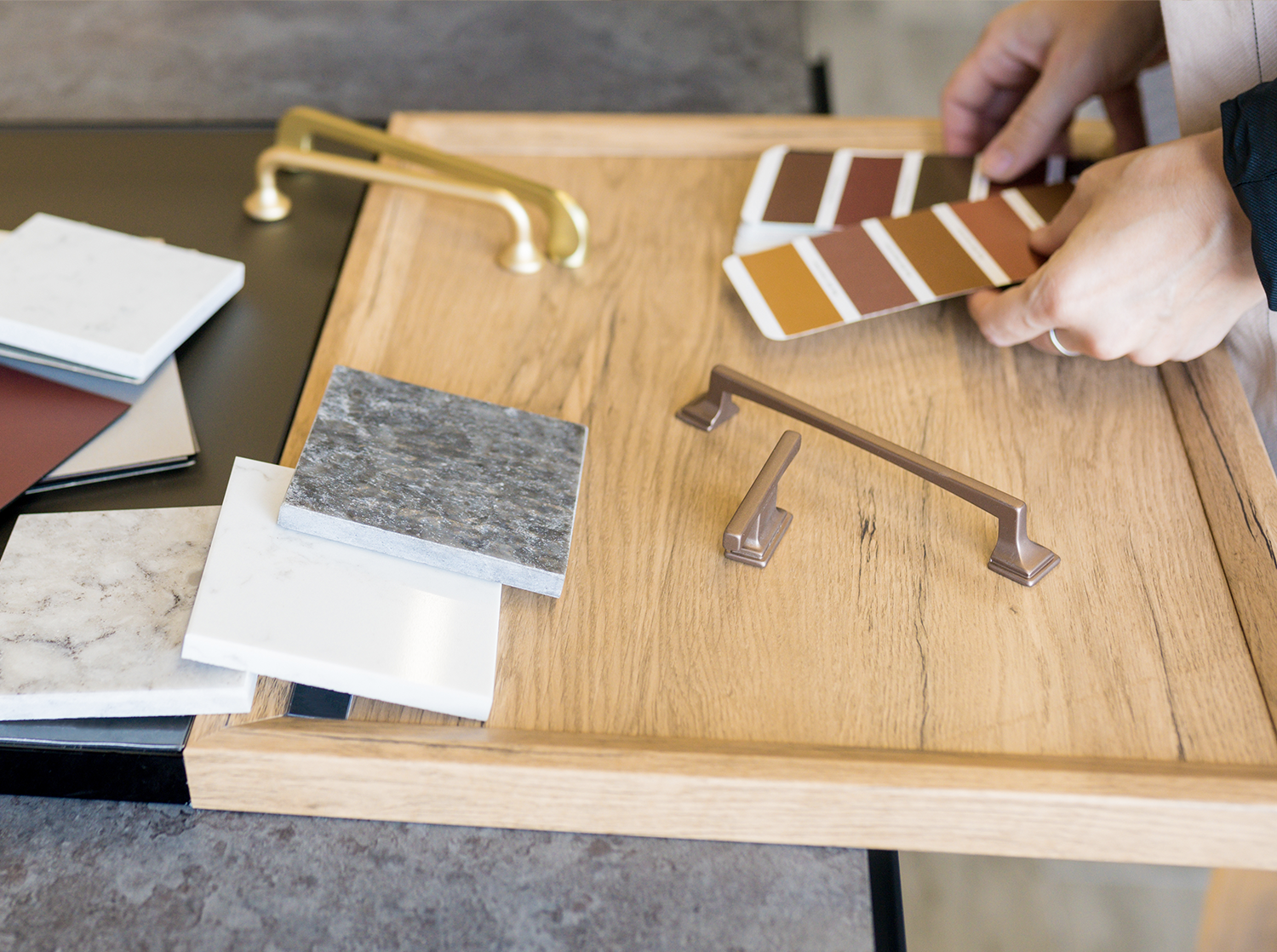
For most bedrooms, Melteca-faced board in a matte white, warm grey, or timber-look finish is the right choice. It's cost-effective and pairs with almost any linen or wall colour without competing for attention.
For a premium result, a timber veneer Melteca finish with brushed brass or matte black handles reads significantly more expensive than it is. Pair it with a linen-look bedhead cushion and the result looks like a professionally designed room.
ABS edging on every exposed edge is essential. Drawer fronts, shelf edges, and the bedside surface all take daily contact. ABS edging protects the panel core and gives every edge a clean, furniture-quality finish that painted edges simply can't match.
Soft-close full-extension drawer runners are worth specifying here. In a bedroom, the difference between drawers that close quietly and ones that don't is something you notice every morning and every night.
Is This a Realistic DIY Build?
Yes. The assembly itself — carcass panels, drawer boxes, back panel, wall-mounted headboard — is well within reach for anyone comfortable with flat-pack furniture. The part that trips most people up is the cutting, and that's exactly what Cutshop® handles.
Send through your measurements, choose your finish and hardware, and the panels arrive precision-cut and edge-banded, ready to go. The headboard panel goes up first and acts as your reference point for everything else. The bedside carcasses are positioned either side, the drawer boxes slot in, and the whole build typically comes together over a weekend.
If you're working with a builder or interior designer, Cutshop® supplies the precision-cut components so installation is clean and fast, with no site cutting required.
Your Bedroom Has Been Waiting Long Enough
A bedroom where the surfaces are at the right height, the cabinetry meets the wall cleanly, and every cable has somewhere to go, is a better place to start and end every day. It's the upgrade most people put off indefinitely, but one of the most straightforward ones to actually do.
FAQ’s
-
The cost depends on the configuration and materials you choose, but custom flat-pack panels from Cutshop® are significantly more affordable than most people expect, especially compared to buying a premade bedhead and matching bedside tables from a furniture store. Because you're supplying the labour yourself, you're paying for precision-cut materials only. Get in touch with your measurements for a quote.
-
A surface of around 400mm × 400mm is enough for a lamp, a phone, and a glass of water. If you have more items that you like to keep on your bedside table, consider expanding those dimensions accordingly.
-
Yes. If your bedroom is a weird shape, this custom cabinetry is perfect for you. Cutshop's® CNC manufacturing cuts every panel to millimetre accuracy, awkward alcoves, non-standard wall widths, and sloped ceilings can all be worked into the design. Bring your measurements in and our team can help you figure out the best configuration for your space.
-
You can absolutely build around an existing frame. The cabinetry is designed and cut to work with whatever bed you already have, the bedside units sit either side of the frame and the headboard panel mounts to the wall behind it. As long as you measure accurately (including the height of your existing mattress), the custom panels will fit cleanly around what's already there.
-
Beyond the panels themselves, you'll need cam locks and shelf pins for the carcass assembly, wall fixings for the headboard panel, and drawer runners if you're including drawers. Cutshop® can supply hardware alongside your panels so everything arrives together and you're not making a separate trip to the hardware store. Ask our team about hardware when you place your order.
