
The Indoor Herb Garden Shelf: How to Keep Basil Alive Past Tuesday
The supermarket basil is dead by Tuesday. The bunch of coriander you bought on Friday has turned to slime in the back of the fridge by Sunday night. The outdoor parsley pot has become snail food, and the mint you planted three years ago is now trying to take over the lawn. And the recipe is asking for two tablespoons, chopped.
Most NZ households have given up at this point and gone back to dried oregano in a jar. Or worse, accepted paying $5 for a new herbs from the supermarket every week, knowing two-thirds of it will end up in the compost.
A herb garden shelf is the answer. A built-in shelf running along the kitchen window — or above the bench, sized for small pots, with a drip catch, and a small clip-on grow light when winter sets in. The herbs live where you cook with them. With precision-cut panels from Cutshop®, the whole thing slots into your existing kitchen as if it had always been there.
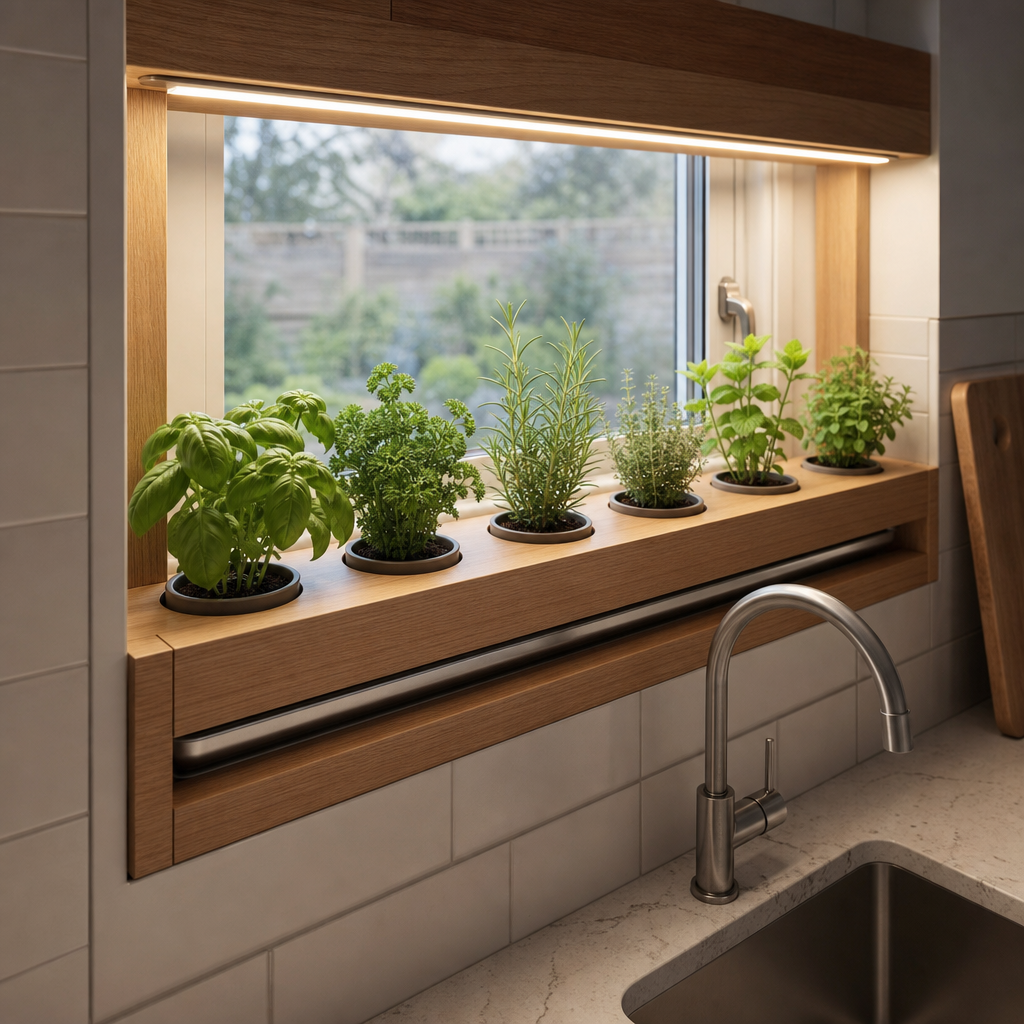
Why supermarket herbs and outdoor pots both fail
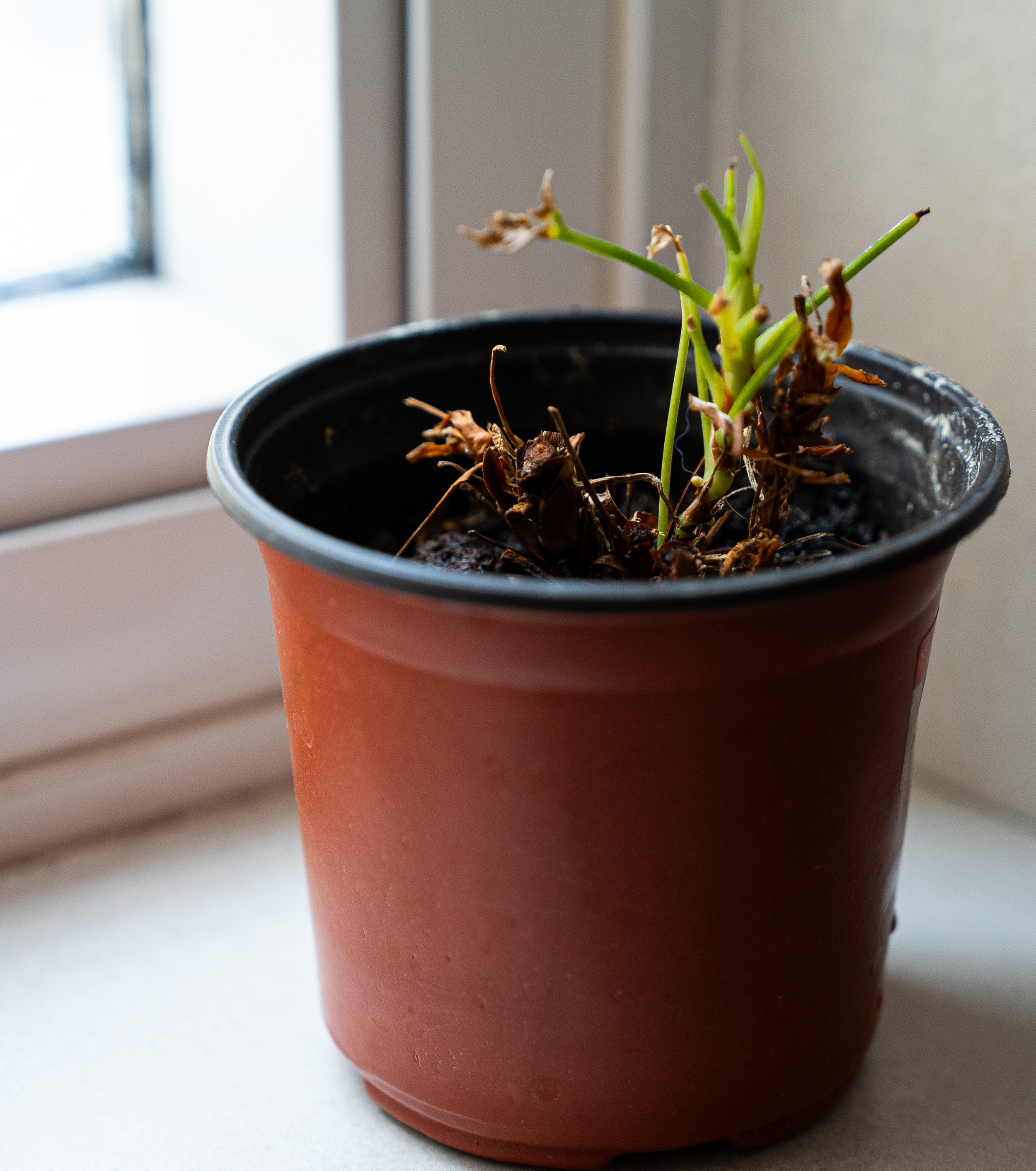
The supermarket potted herbs are essentially cut flowers. They're grown fast in commercial glasshouses on continuous water and light and packed into a tiny plastic pot for the shop. The roots are too cramped and the plant burns through its reserves in five days. That’s why they’re such a struggle to keep alive on the kitchen bench.
Outdoor herb pots have the opposite problem. Plenty of light, plenty of root space, but exposed to NZ's particular hazards — frosts in the south, snails and slugs everywhere, possums in some suburbs, and three months of insufficient sun between May and August in most of the country. Basil dies in the first cold snap. Coriander bolts the moment the sun comes out. Parsley’s a survivor but it’s lonely 😢.
A built-in indoor herb shelf solves both problems at once. Stable temperature, controlled light, the right pot size for the plant, and the convenience of your herbs thriving in your kitchen.
Where the shelf lives
Three positions work well in most NZ kitchens.
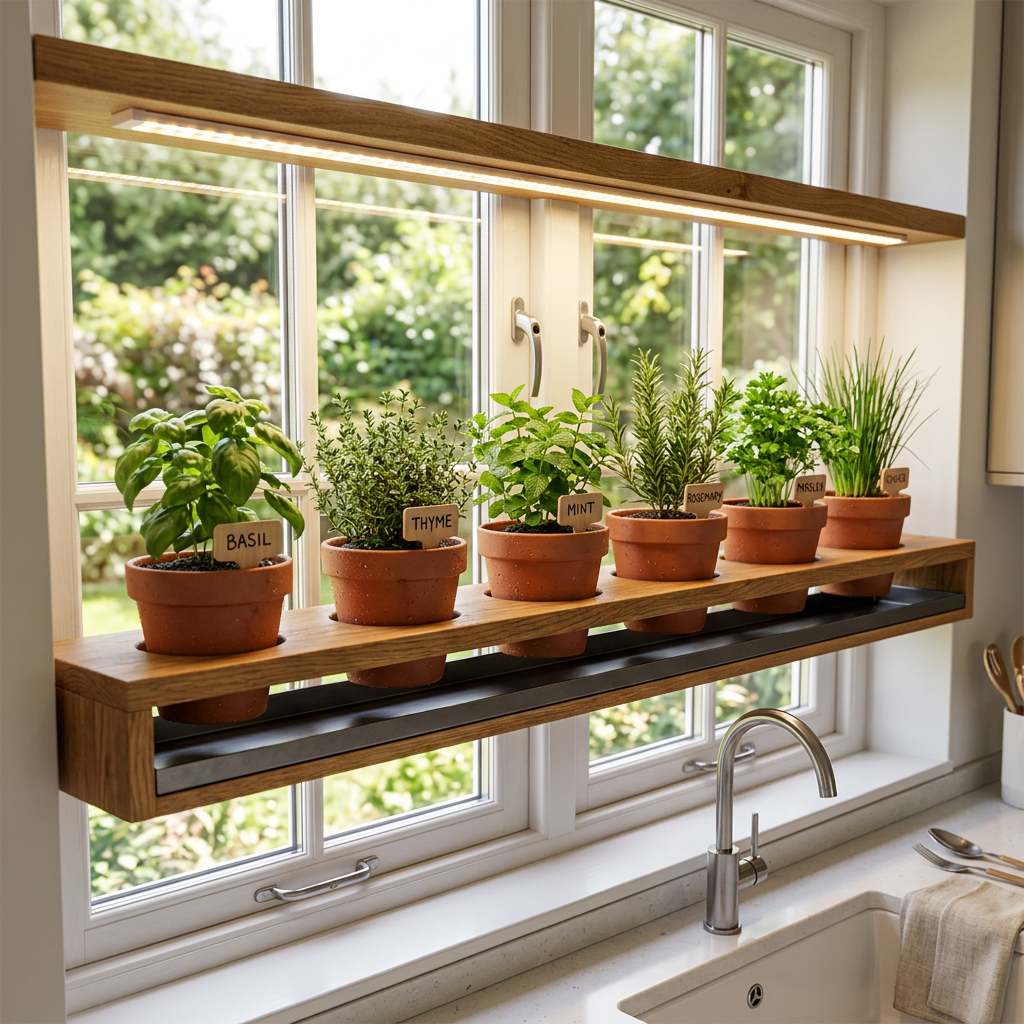
Across the kitchen window
The most common spot, and almost always the right one. A shelf running across the bottom of the kitchen window above the sink, sized to the window width, with the pots sitting between the bench and the bottom sash. North or east-facing windows get the best results. South-facing windows usually need a grow light to keep up through winter.
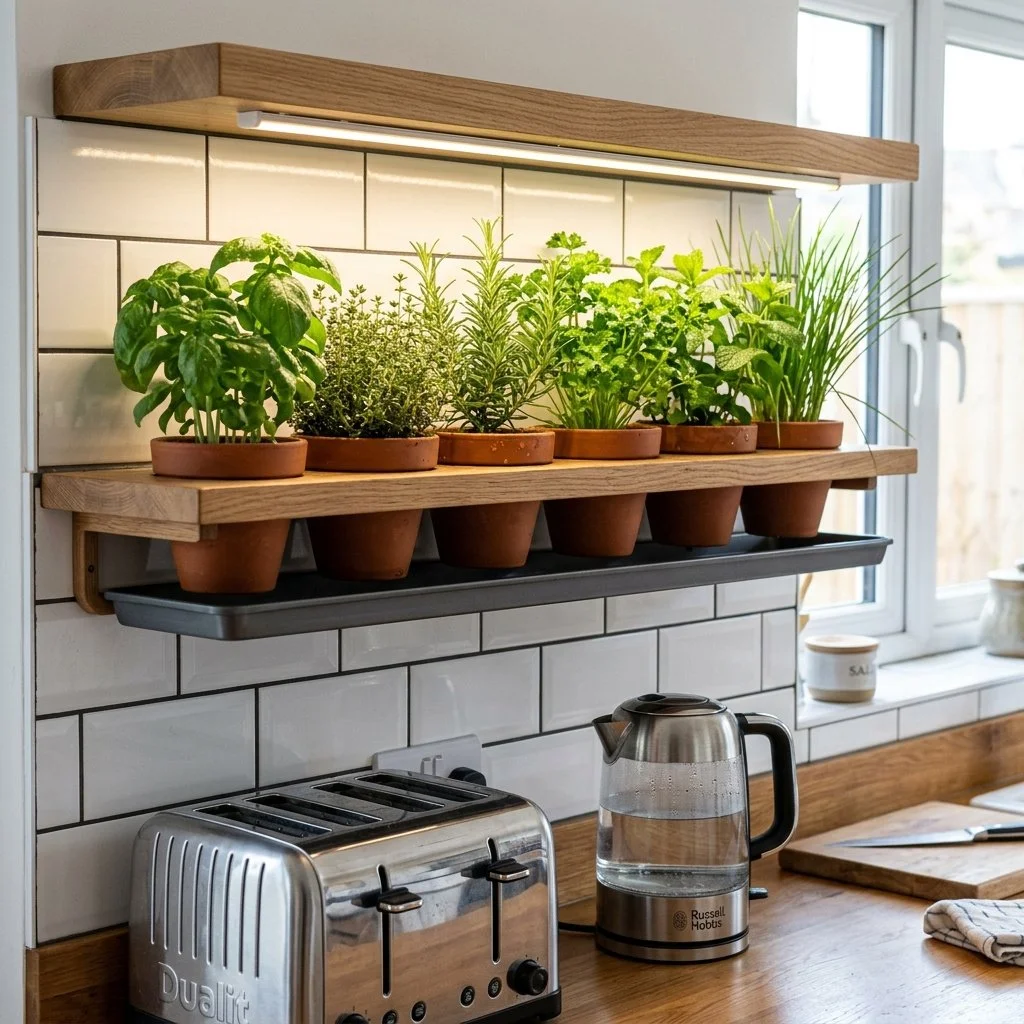
Above the bench, against the wall
For kitchens without a useful window. A shelf or two mounted directly to the wall, set 350–400mm above the bench so it clears the toaster and the kettle. Pair with a slim LED grow strip on the underside of the shelf above, and the herbs grow regardless of which way the room faces.
At the end of the kitchen run
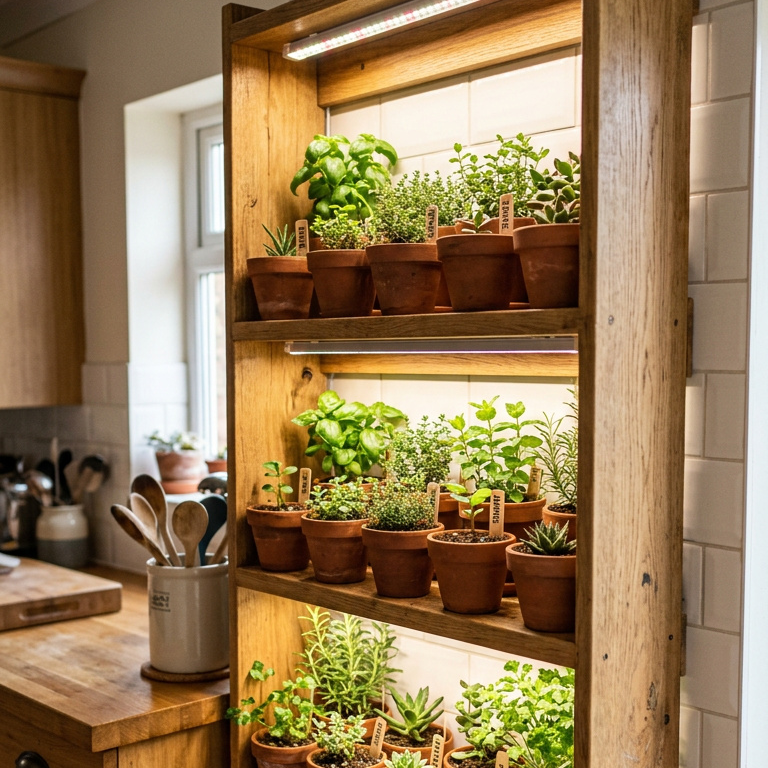
For galley kitchens or apartments where the bench is already busy. A vertical run of three or four shelves at the end of the kitchen, sized to a tower of small terracotta pots, with a drip tray at the base and a grow light mounted into the top shelf. Works beautifully in townhouses where the kitchen has no window of its own.

Sizing the shelf around the pots
Shelf length
Allow 160mm of width per pot for a clear gap between them, or 140mm if you want them touching. Six 140mm pots therefore want a 900–1000mm shelf with a little breathing room at each end.
Shelf depth
180–220mm is the comfort zone for a row of 140mm terracotta pots, with a 10–15mm clearance at the front so the pots aren't perched on the edge. For deeper pots — rosemary, chilli — step up to a 250mm shelf.
Light clearance above
Allow 200–250mm of clear height above the pots for the plant to actually grow into. Basil and parsley can hit 300mm in a good summer, so anything tighter and you're regularly trimming just to fit them under the shelf above.
Drip tray channel
Route a 30–40mm recessed channel along the front face of the shelf, with a slight fall (3–5mm) toward one end and a 12mm drain hole at the low end into a removable tray. Watered herbs always over-drain. The tray catches everything before it runs onto the benchtop.
Cutshop Tip®
Pots dictate the shelf, not the other way around. Pick the pots first, then build the shelf to fit.
Grow light position
If the shelf needs supplemental light, recess a 5–8mm channel into the underside of the shelf above to take an LED grow strip. Keep the strip 200mm clear of the pot tops to avoid scorching.
The grow light
Most NZ households can run a kitchen-window herb shelf without supplemental light from October through to about April. Winter is the hard part. June and July are when the basil decides to give up and the parsley stops growing back from being cut.
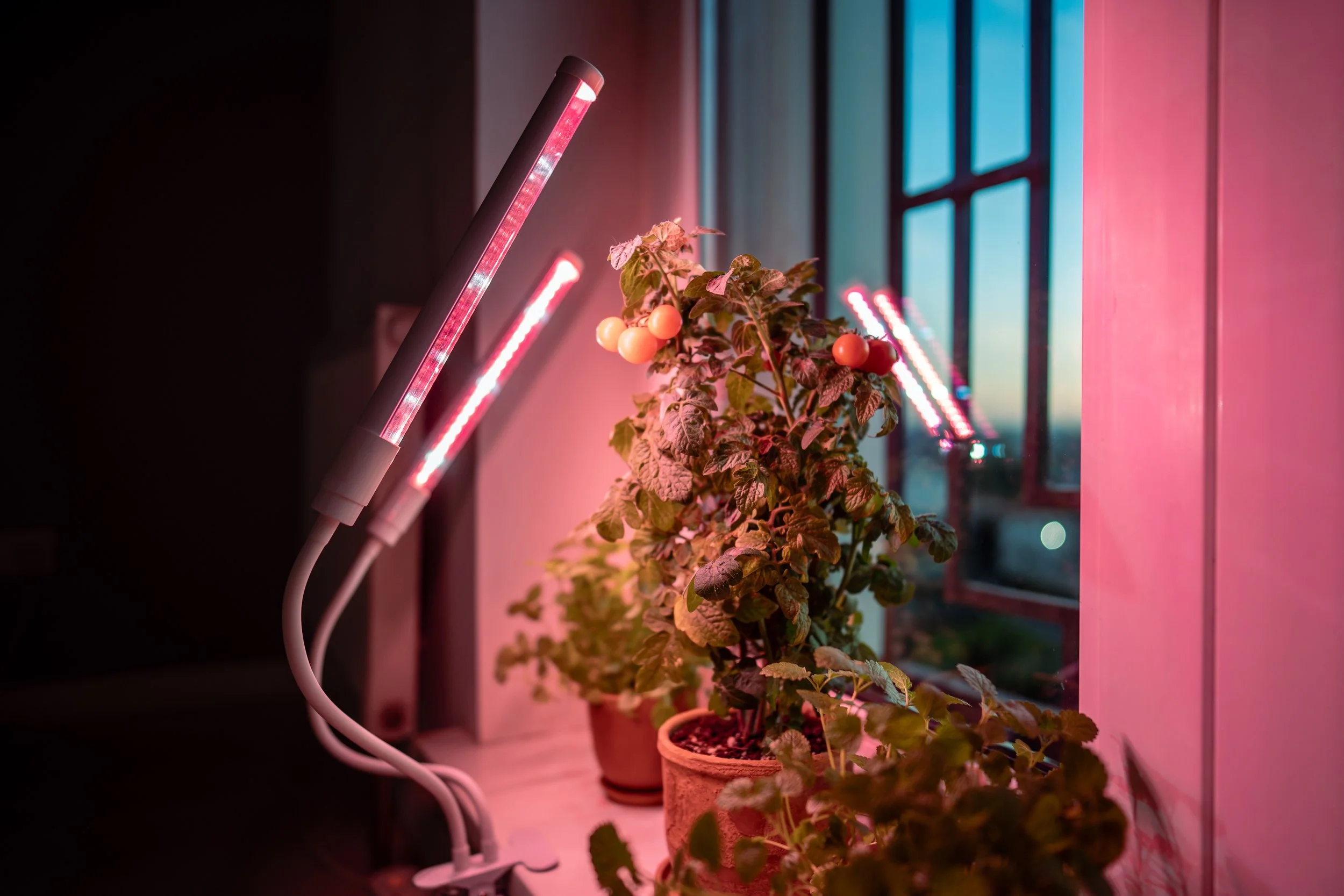
A 12V LED grow strip with a warm-white spectrum (3000–4000K) bridges the gap. They draw 8–15W per metre, switch on a simple timer (typically 6 hours after sunset), and cost about $2 a month to run. Cutshop® can pre-route the strip channel and the cable run so the install is plug-and-play rather than a fiddly retrofit.
Materials that handle the wet
A herb shelf is a wet zone. Watering splash, drip from pot bases, the occasional spilled tomato sauce. Specify accordingly.
Melteca-faced board suits the supporting brackets and any vertical panels. It wipes clean, matches the rest of the kitchen, and doesn't pick up watermarks the way painted MDF does.
MR MDF is the right choice for the shelf and the drip tray channel. It handles the constant low-level damp around the pots far better than standard MDF.
Cutshop® Tip: Skip timber veneer for the shelf surface itself. Veneer and watering cans don't mix, and the lift starts faster than people expect.
ABS edging on every exposed edge is essential here. The front edge of the shelf in particular sees daily watering can splash. Edge banding is what keeps the panel core dry.

Putting it together
A herb shelf is a simple custom build that most kiwis should be able to manage at home. Two L-brackets into the studs, a shelf panel, a drip tray, and optionally a strip light wired in. Most people comfortable with a drill can install one in an afternoon.
The trick is in the cutting and routing. The drip channel and the strip-light groove are routed operations that are difficult to do well with hand tools. Cutshop® machines both on the CNC before the panels leave the factory, so what arrives at the house is ready to mount.
The final product
A herb garden shelf fits onto a window or wall you've already got, and gives the kitchen the green corner it's been missing for years. Your cooking will improve, your health will improve and your grocery bill will reduce. Whatever your motivation, this build makes sense on so many levels.

Frequently Asked Questions
-
Saucers work, but they're the part that fails first. Saucers slide, get knocked off when you reach across to grab something, and the water ends up on the benchtop anyway. A routed drip channel built into the shelf catches everything regardless, runs the water to a single drain point, and the removable tray underneath is easier to empty than a row of saucers. For a 600mm shelf with three pots, a saucer setup is fine. For anything longer, the channel pays for itself.
-
Not if the build is detailed properly. A routed drip channel with a 3–5mm fall toward a single drain hole, an MR MDF shelf with ABS edging on the front, and a removable tray under the drain point all combine to keep water on the shelf rather than running off it. The one detail to specify carefully is the back edge — if the shelf butts against a painted gib wall, run a thin bead of clear silicone along the join to stop watering splash wicking down behind the shelf. Done well, the joinery underneath sees no more moisture than the rest of the kitchen.
-
Plan for studs. A row of six 140mm terracotta pots filled with damp soil weighs about 12–15kg, plus a bit more after watering, and that load multiplied across a span of 900mm puts real strain on a gib-only fixing. Top-fix the shelf brackets into wall studs with concealed L-brackets, not just into gib with toggle anchors. If your stud spacing doesn't line up with where the shelf needs to sit, run a horizontal hardwood batten across multiple studs first (50mm x 25mm is enough) and fix the brackets into the batten. The batten hides behind the shelf and gives you anchor points anywhere along the wall. For a shelf longer than 1200mm, add a third bracket in the middle.
-
Easily matched. Cutshop® holds the same Melteca, HMR MDF and ABS edging stock that most NZ kitchen manufacturers use, so the shelf and brackets can be cut from the same board family as the existing cabinets and the bench-end panels. For a kitchen that's already been installed, the cleanest approach is to take a small cutoff or a door front into your nearest Cutshop® branch — that lets us match the exact colour and finish rather than guessing from a photo. If the kitchen is a painted finish, supply the paint code and the shelf can be primed ready for the same paint, applied on site once it's mounted.
-
You probably don’t need an electrician. A 12V LED grow strip running off a plug-in transformer is a plug-and-play job. The transformer plugs into any standard wall outlet, the strip clips into the routed channel on the underside of the shelf above, and the cable runs back along the channel to the transformer hidden behind the joinery. No sparky required, no compliance certificate, no fuss. The only time you need a registered electrician is if you're hard-wiring the transformer into the kitchen's existing lighting circuit (typically so it switches with the kitchen lights rather than running on its own timer). That's a small job, but it does need a Certificate of Compliance.
