
Pet Feeding Nook: How to Stop the Dog + Cat Bowls Migrating Around Your House
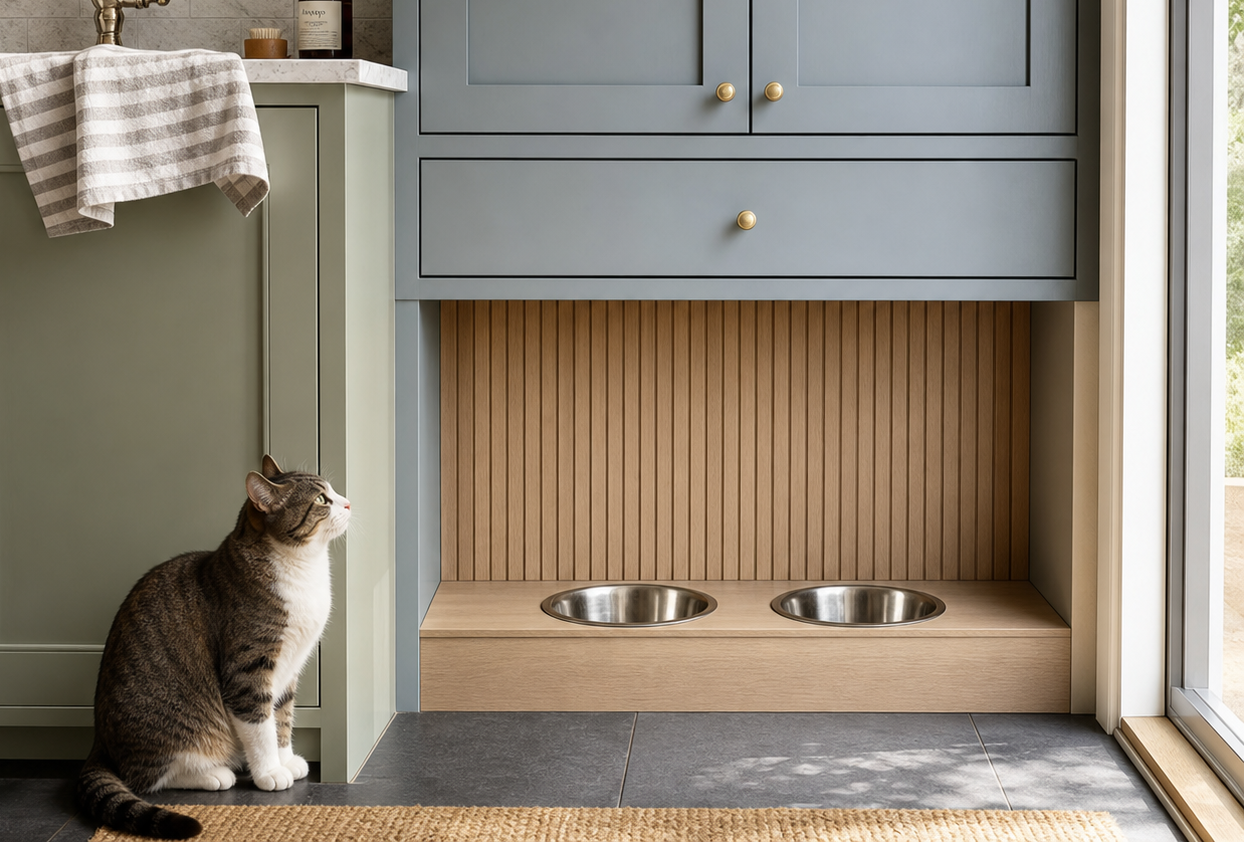
Every kitchen has a small civil war going on near the corner where the pets eat. The water bowl gets kicked across the tiles. The food bowl slides 5cm sideways every time it gets nudged. The pet food bag is propped against the dishwasher because it doesn't fit in the pantry. The bowls keep moving and the food bag is left out because they were never given a home built just for them.
A pet feeding nook is the answer. An alcove at the end of the kitchen run or in the laundry, with the bowls recessed into the build so they can't be kicked, and a large pull-out drawer for hiding those big bags of pet food. With precision-cut panels from Cutshop®, it slots into the joinery you've already got.
Why bowls on the kitchen floor never stay put
The problem isn't the bowls themselves. It's that they're trying to do their job in a strip of floor designed for walking, not eating.
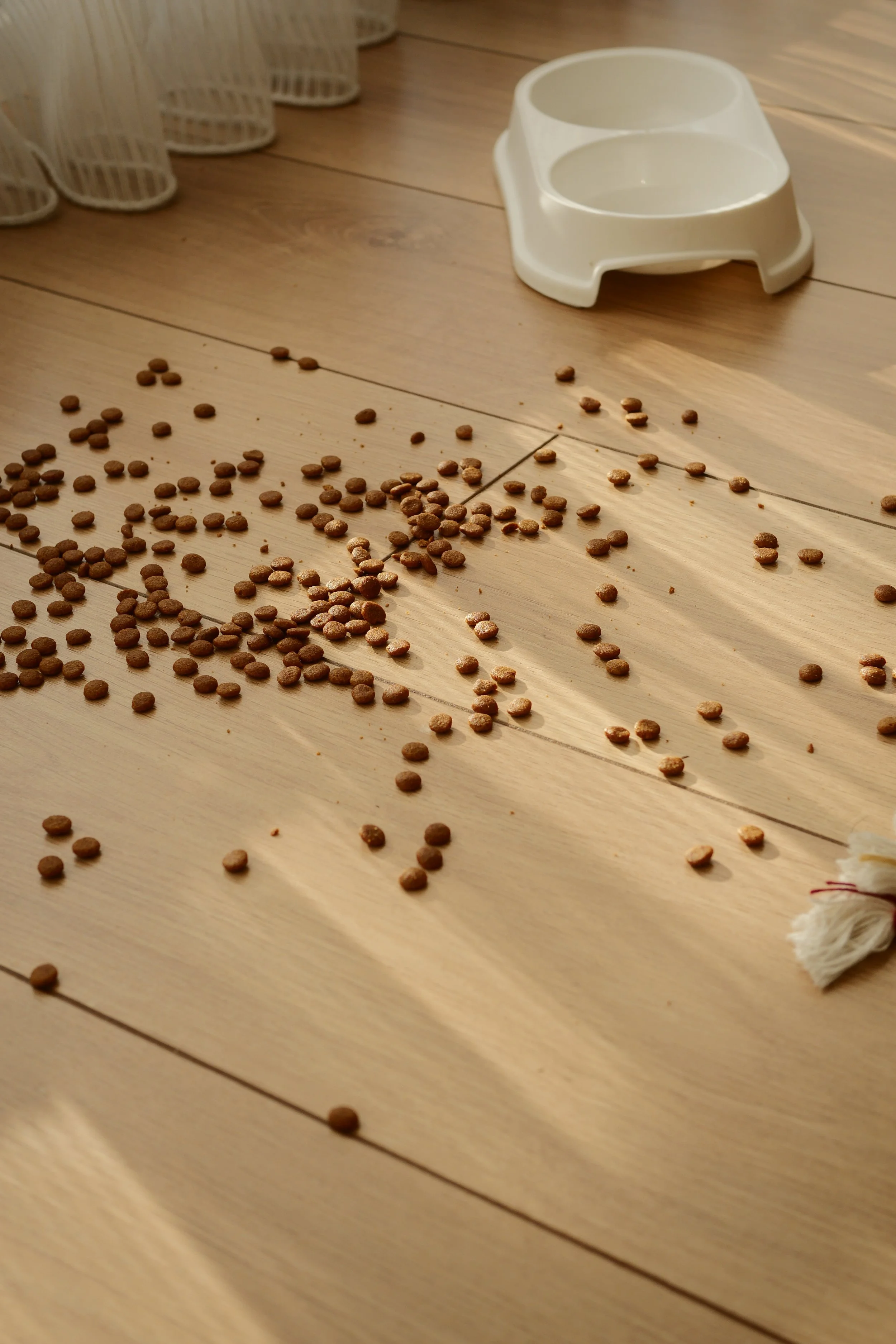
A dog bowl usually sits where the kitchen island meets the dishwasher, in a section of floor that gets walked across forty times a day. Every passing foot nudges the bowl sideways. Within a week, the food bowl has drifted metres from its starting position and the waterbowl has sloshed a trail of wetness across your kitchen.
The other issue is height. A bowl on the kitchen tile sits 50mm off the floor, which is the wrong height for any dog over 10kg. Vets have been recommending elevated bowls for years to reduce strain on a dog's neck and shoulders, particularly for larger breeds and older animals. A built-in nook lets the bowl sit at the right height for the animal eating from it, not the height of whichever bowl was on special at the pet shop.
A pet feeding nook fixes both the migration problem and the height problem in a single piece of joinery.
What components makes a pet feeding nook functional?
The exact mix varies by household, but most nooks include some combination of:
A recessed food bowl, dropped into a stepped platform
A recessed water bowl
A pull-out drawer for easy scooping from the food bag
A second drawer for treats, wet food sachets and a can opener
A small shelf for the brush and pet medicine
For households with two pets, double up the bowl recesses: two food bowls side by side, or one nook in the kitchen for the dog and a second one in the laundry where the cat can eat without being mugged.
Cutshop® Tip: Pick the bowls from the pet shop first, then have the nook cut around them. Bowl diameters vary by 10–30mm between brands, and a recess that's a touch too wide looks unfinished.
Where to put your pet station?
Three spots tend to work, and the right one usually comes down to who else lives in the house:
At the end of the kitchen
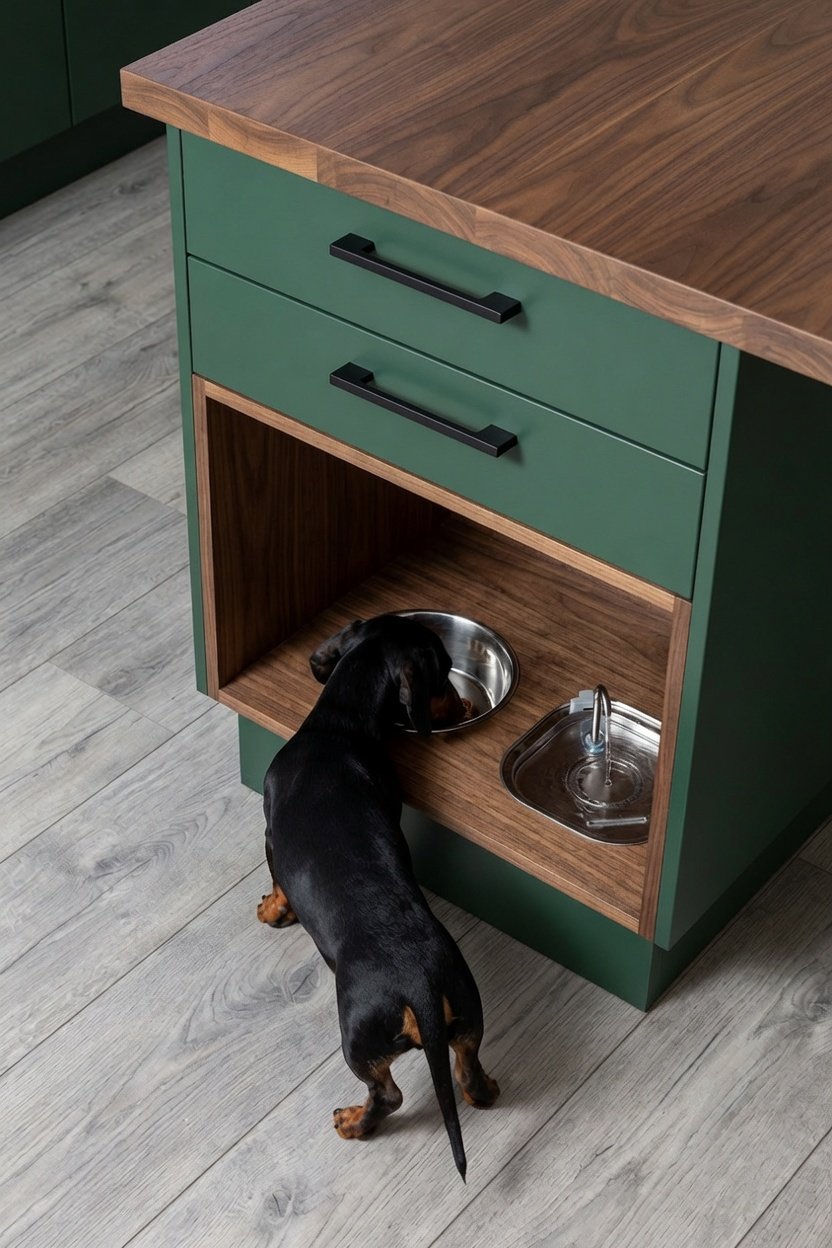
The most common location. A recessed alcove built into the end of the island, or into the cabinetry next to the fridge.
The back door
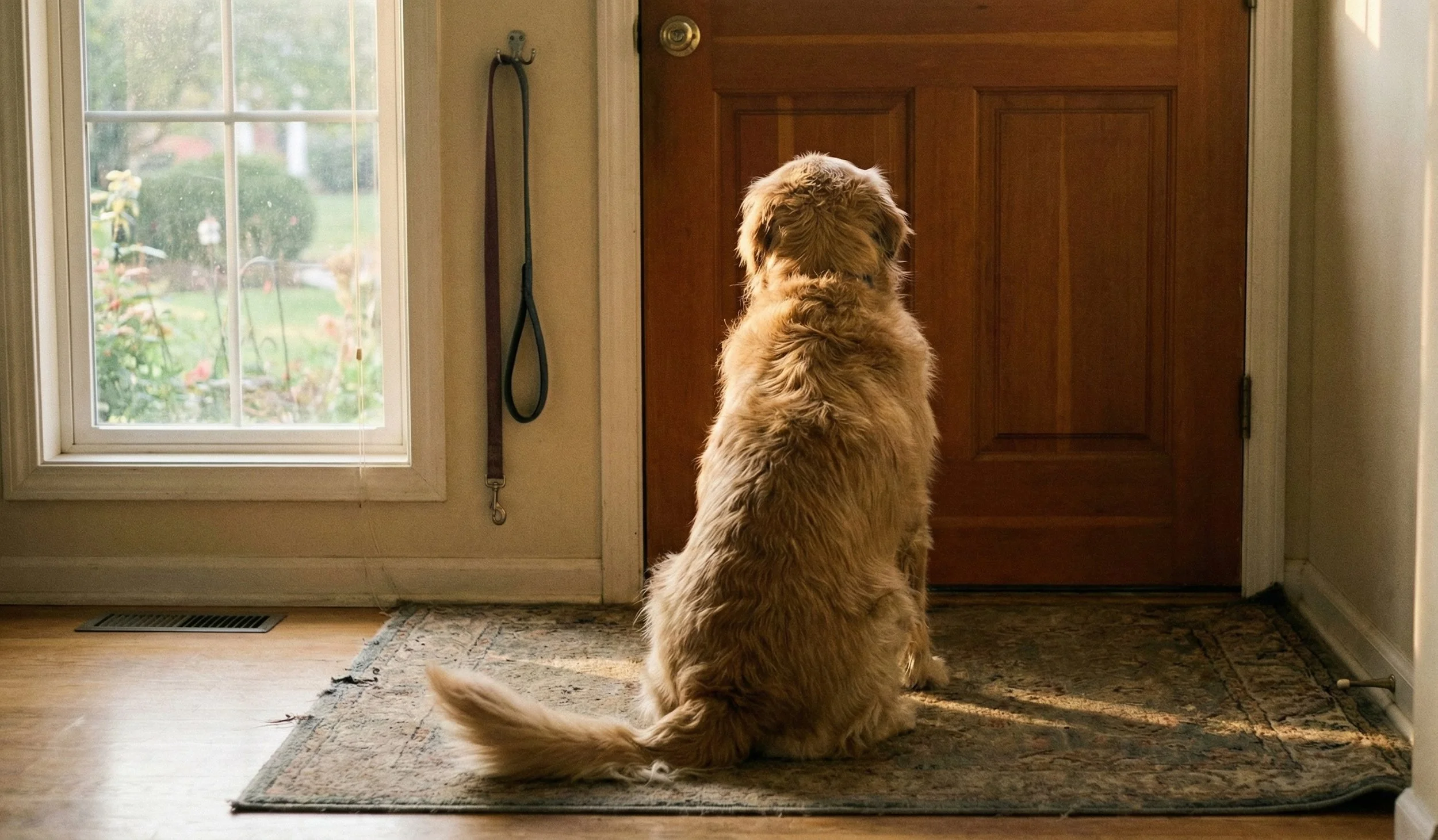
A hybrid spot. The corner where the lead comes off and the muddy paws get wiped. Works particularly well in homes with an indoor-outdoor flow where the dog is half-inside, half-outside through the day.
In the laundry
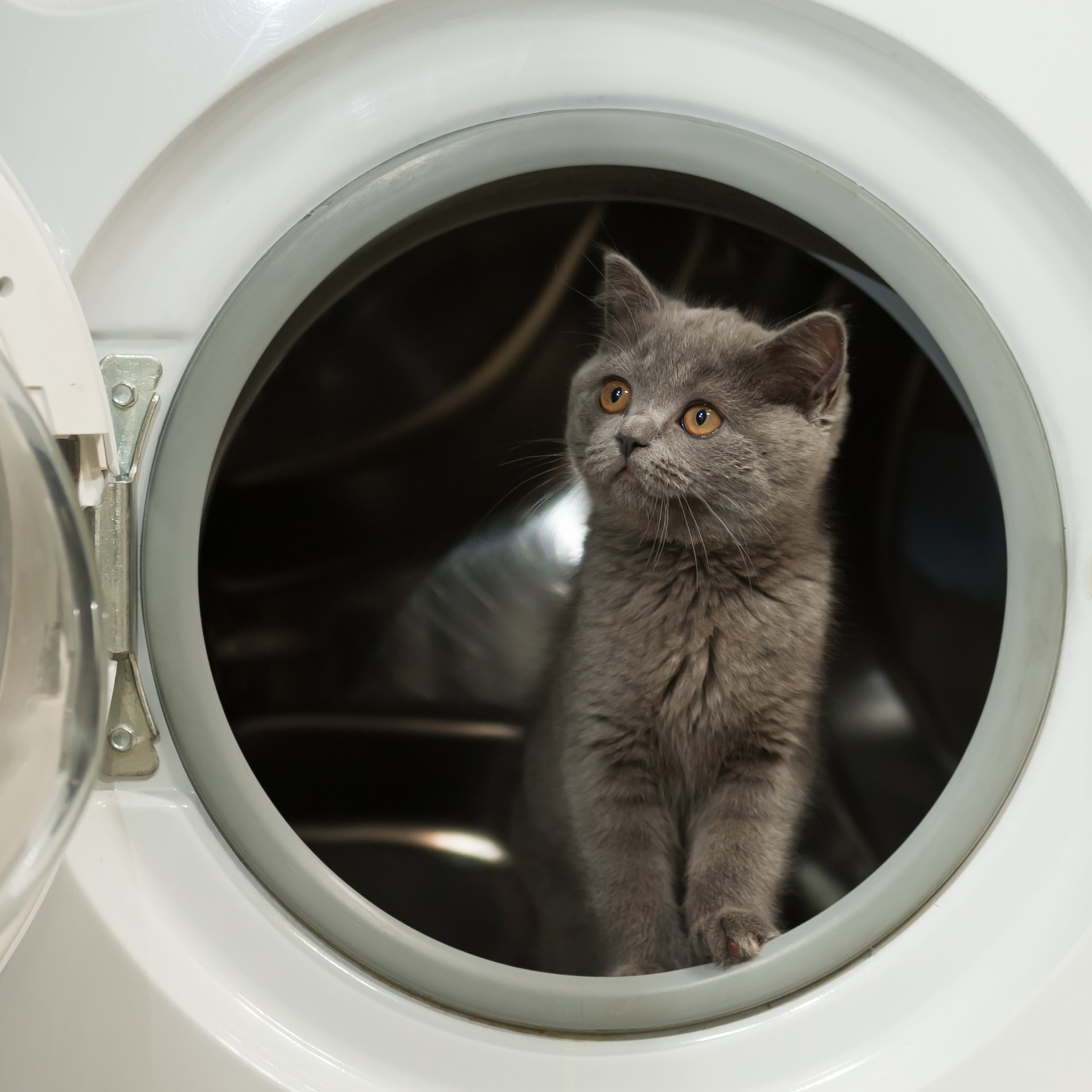
The best call for cats in households where the dog feeds in the kitchen and the cat needs its own zone, or for anyone who'd rather not have pet food in the main cooking area. A laundry nook can tuck beside the washing machine, or sit on a shelf above the dryer where it stays out of the dog's reach.

Get the bowl height right for the animal eating from it
This is the measurement that matters most, and the one most people get wrong.
Cats and very small dogs (under 5kg)
Bowls at floor level, or recessed into a low step around 50mm above the floor. Cats prefer to feel grounded when they eat and won't use an elevated bowl reliably.
Small to medium dogs (5–15kg)
Recess the bowls into a stepped platform around 150–200mm above the floor. High enough to reduce neck strain, low enough that the dog isn't reaching up.
Medium to large dogs (15–35kg)
250–350mm above the floor is the sweet spot. A bowl set into the toe-kick zone of a kitchen cabinet typically lands around this height.
Very large breeds (35kg+)
400mm or higher. For these dogs the bowl can sit at full height (around 400–450mm), which slots perfectly into the bottom rail of a cabinet run.
A useful rule of thumb: For dogs, the top of the bowl should sit at roughly the dog's chest height when standing. Measure your dog before any panels are cut.
Other measurements worth pinning down
Pet food drawer depth
Most large pet food bags (10–20kg) stand at around 350–450mm tall. A drawer with 500mm of clear internal height swallows the full bag standing upright with the top folded over. Anything shallower and the bag has to be decanted into a container, which is fine — just decide which approach you want at the design stage.
Bowl recess diameter
Add 5–8mm to the outer diameter of your chosen bowl. Any tighter and the bowl jams when wet, any looser and water sloshes between the bowl and the recess.
Bowl recess depth
Cut the recess so the rim of the bowl sits flush with the surface, or sits 5–10mm above. Flush looks cleaner, but slightly above is easier to lift out for washing.
Splash lip
A small 5–10mm raised lip around the bowl recess catches the water that the dog inevitably spills out of the bowl, and stops it running off the bench onto the floor.
Material choices that survive the mess zone
A pet feeding nook lives in a wet zone. Water splash, dog slobber, the occasional knocked-over bowl. Specify materials accordingly.
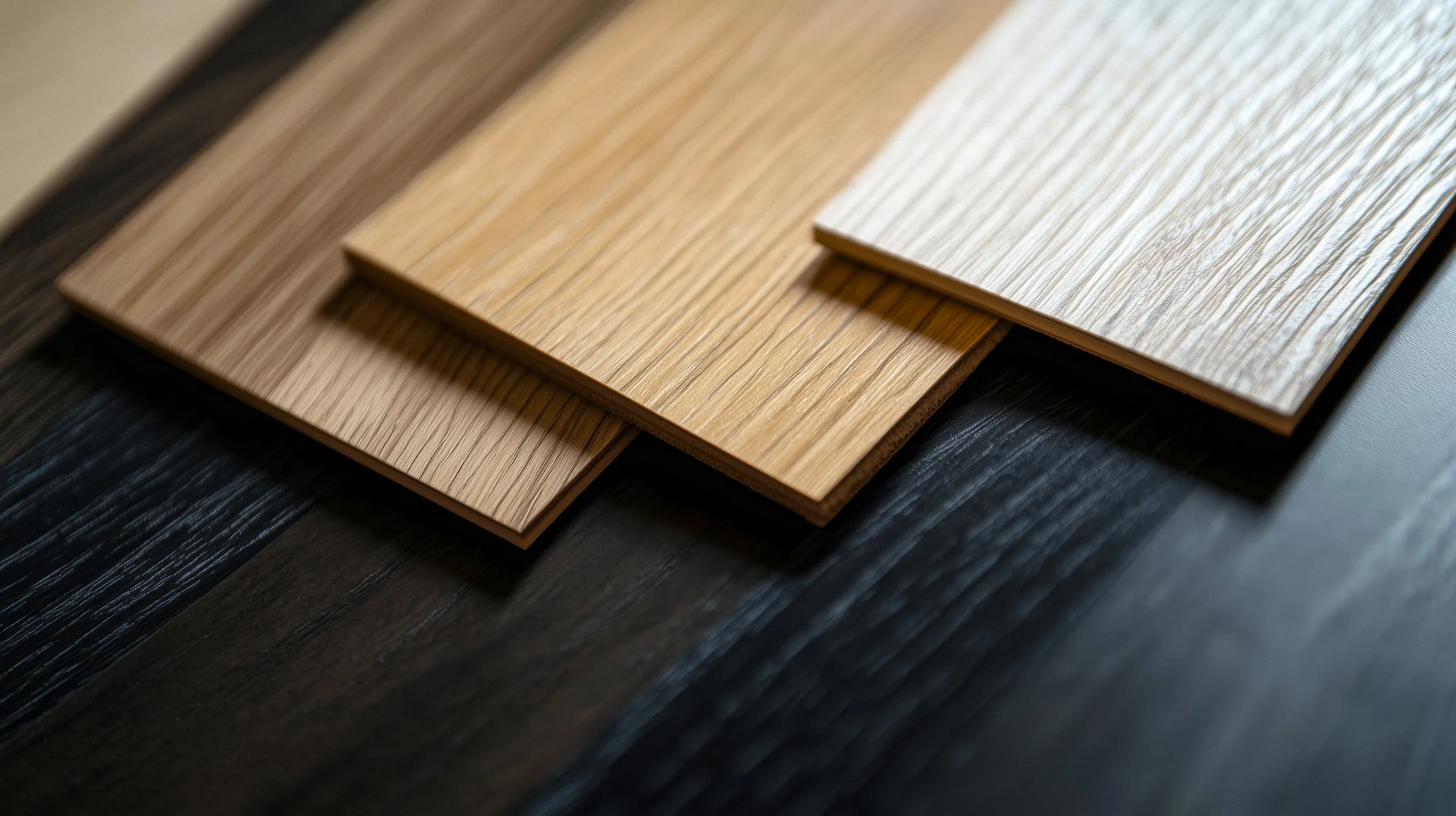
MR MDF is the right choice for the carcass and the splash panel directly behind the bowls. It handles the constant low-level damp around the water bowl without swelling or breaking down at the edges.
Melteca-faced board suits the drawer fronts and the toe-kick panel. It wipes clean with a sponge and pairs with whatever finish the rest of the kitchen is running.
HPL (High Pressure Laminate) is worth the upgrade for the benchtop surface around the bowls. It shrugs off the constant moisture far better than melamine, and the recess edges stay sharp for years rather than softening over time.
ABS edging on every exposed edge is essential here. The recess opening, the toe-kick line, the drawer front; each needs a sealed edge to stop moisture creeping into the panel core.
Tip: Skip timber veneer anywhere near the bowls. Veneer and water are a very bad match.
Build it in an afternoon
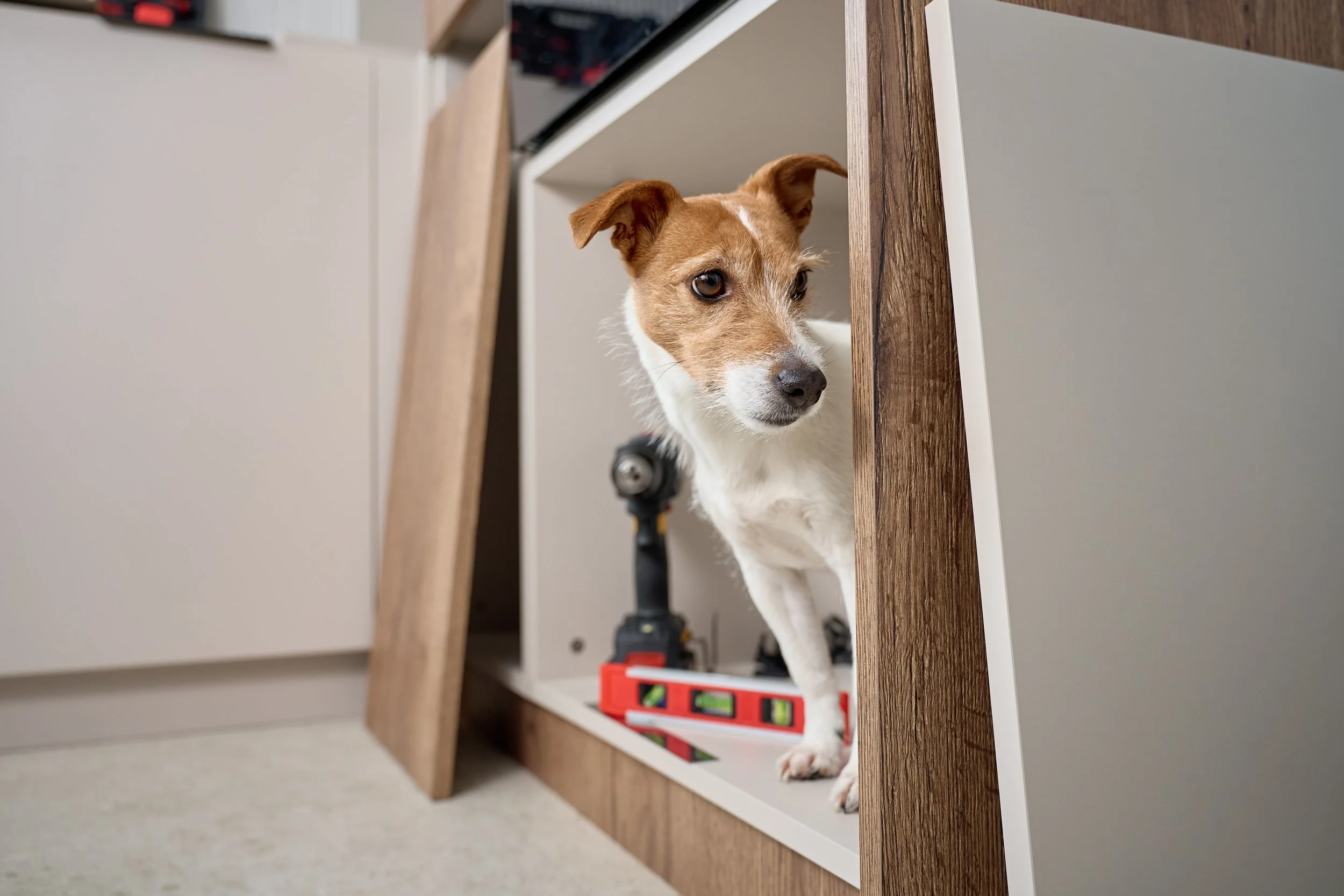
The pet nook is one of the simpler custom builds you can take on. The bowl recesses are a single CNC operation on a flat panel and the food compartment is a standard cabinet drawer on full-extension runners. Most people comfortable with assembling a flat-pack cabinet can build a pet feeding nook over an afternoon. If you're handing it to a builder, the pre-cut panels mean they're installing rather than fabricating, which should keep the labour quote low.
The result?
No more cat biscuits crunched underfoot, no wet socks in the morning from water tracked across the floor, no bowl wedged behind the dishwasher. This is when you wonder why you put up with the old situation for so long.
A pet feeding nook is a small built-in that performs superbly in a busy household. It costs very little to add, fits into joinery you've already got, and finally gives your pet a defined corner of the room that's theirs – they’ll love it just as much as you will.

Frequently Asked Questions
-
Less than it does now, but a small amount is unavoidable with any dog. The recessed bowl design prevents the bowl itself being kicked or knocked over, which eliminates the big spills. For the splash that happens every time the dog drinks, run a small lip (5–10mm proud) around the bowl recess so water stays contained on the bench rather than running off onto the floor. For older or particularly messy drinkers, position the nook over a tile section of floor rather than over timber or carpet.
-
Possibly, but it usually works better as two separate nooks. Dogs and cats eat at different paces, at different heights, and (in most households) different food. The cleanest setup is a dog nook at the end of the kitchen run and a cat nook in the laundry or on a benchtop the dog can't reach. If space only allows one nook, build it with two side-by-side bowl recesses at different heights (the dog's lower in a stepped section, the cat's higher and to one side) and accept that you'll occasionally referee.
-
Less than you'd think, but cleaning is part of the design. The bowls lift straight out of the recess for washing, which is the whole point of a 5–10mm proud rim. With the bowls out, the recess wipes clean with a damp cloth in under a minute. The HPL surface around the recess doesn't absorb water or food residue, so there's nothing to scrub. The one detail worth getting right at build stage is a small radius (3–5mm) at the inside corners of the recess rather than a hard 90° edge, it stops crumbs and water collecting in the corner and makes the wipe-down a one-pass job.
-
Yes. A plumbed water bowl runs a 6mm food-grade flexible line from the cold-water supply under the sink across to the back of the nook, with a small float valve fitted inside a recessed bowl (the same mechanism a toilet cistern uses, just miniaturised). The water level holds itself constant, the dog always has fresh water, and you stop having to remember to top it up. Worth getting a plumber to run the line at the same time as any other under-sink work to keep the cost down. Specify a slightly deeper bowl recess (around 100mm rather than 60mm) to accommodate the valve below the waterline.
-
It retrofits easily. The nook can be added by removing the toe-kick panel at the end of an existing cabinet run and replacing it with a stepped panel that holds the recessed bowls, with the pet food drawer cut to fit inside the existing cabinet carcass. No need to rip out cabinets or change the layout of the kitchen. If you've got a small corner at the end of the island or beside the fridge, that's all the room you need. Send through a couple of photos and the dimensions of the spot you're thinking about, and Cutshop® can cut a nook that drops in alongside what's already there.
