
The Hidden Cost of a “Cheap” Flat-Pack Wardrobe
A flat-pack wardrobe is one of the easiest purchases in the house to justify. It’s a few hundred dollars, it’s in stock, and it solves the problem this weekend rather than in six weeks. Nobody agonises over it.
Which is exactly why almost nobody does the math on what happens next.
The price on the box is the one cost you can see. The rest arrive over the next few months through the space you can’t use, the stuff that ends up somewhere else, the weekends you spend “fixing” it, and the bill for putting it right properly the second or third time around.
Here’s what that actually adds up to.
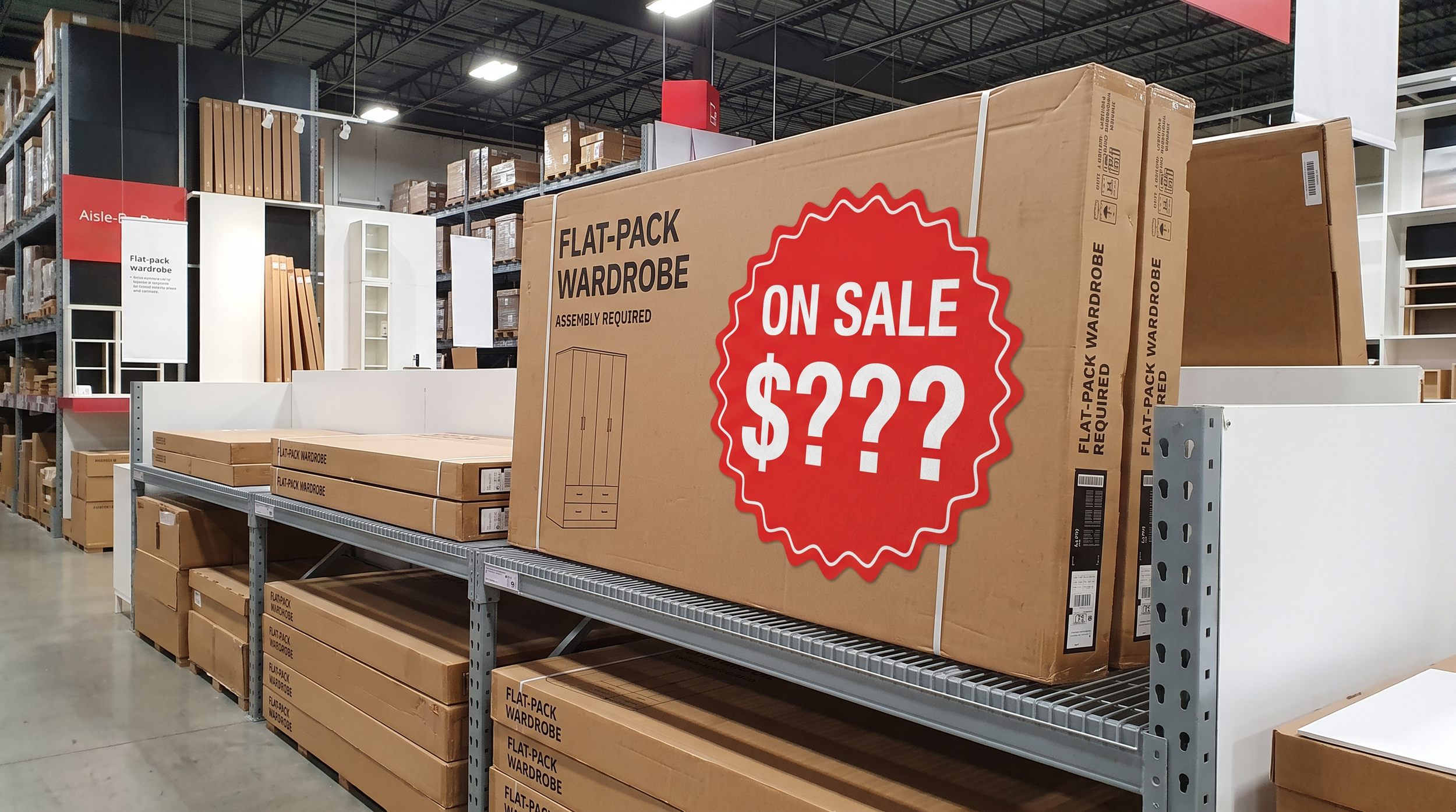
The sticker price is the smallest number involved
Start with the obvious one: flat-pack wardrobes don’t last, and they’re not designed to.
Thin chipboard carcasses sag under folded clothes. Cam-lock fittings work loose a little more with every open and close, until the whole box racks out of square. Foil and paper-wrapped edges chip at the corners, then lift, then swell the first time something damp touches them. Sliding doors drop out of alignment once the frame is no longer true.
None of that is a defect. It’s the design brief. The unit was built to a price point that assumes it will be replaced quickly.
So the honest way to price a flat-pack wardrobe isn’t $200. It’s $200, every one to two years, plus a weekend or two each time. Over the twenty years you’re likely to be in the house, that’s a lot of different wardrobe units and many assembly weekends all to end up exactly where you started — with a wardrobe that doesn’t fit the room.
You’re paying a mortgage on space you can’t use
This is a cost that nobody counts, and it’s by far the biggest one.
Every square metre of your house was paid for, at purchase, at build, and every fortnight since. Work backwards from a typical NZ home and the floor area under a wardrobe wall represents a meaningful chunk of what you borrowed. That space is on your mortgage whether you use it or not.
Now look at what a standard flat-pack unit does with it. Built to warehouse widths of 600mm, 900mm and 1200mm and stopping at around 2000–2100mm tall, it leaves you:
Dead air above. A 2.4m ceiling leaves 300mm-plus doing nothing. A villa with 2.7m studs leaves closer to 600mm — a full extra shelf, the length of the wall.
Dead space beside. Two 900mm units in a 2.1m alcove strand 300mm that’s too narrow for anything and too visible to ignore.
Wasted depth. Run shallower than a hanger needs and shoulders press the door. Run deeper than 580–600mm and you’ve bought floor space to store nothing at all.
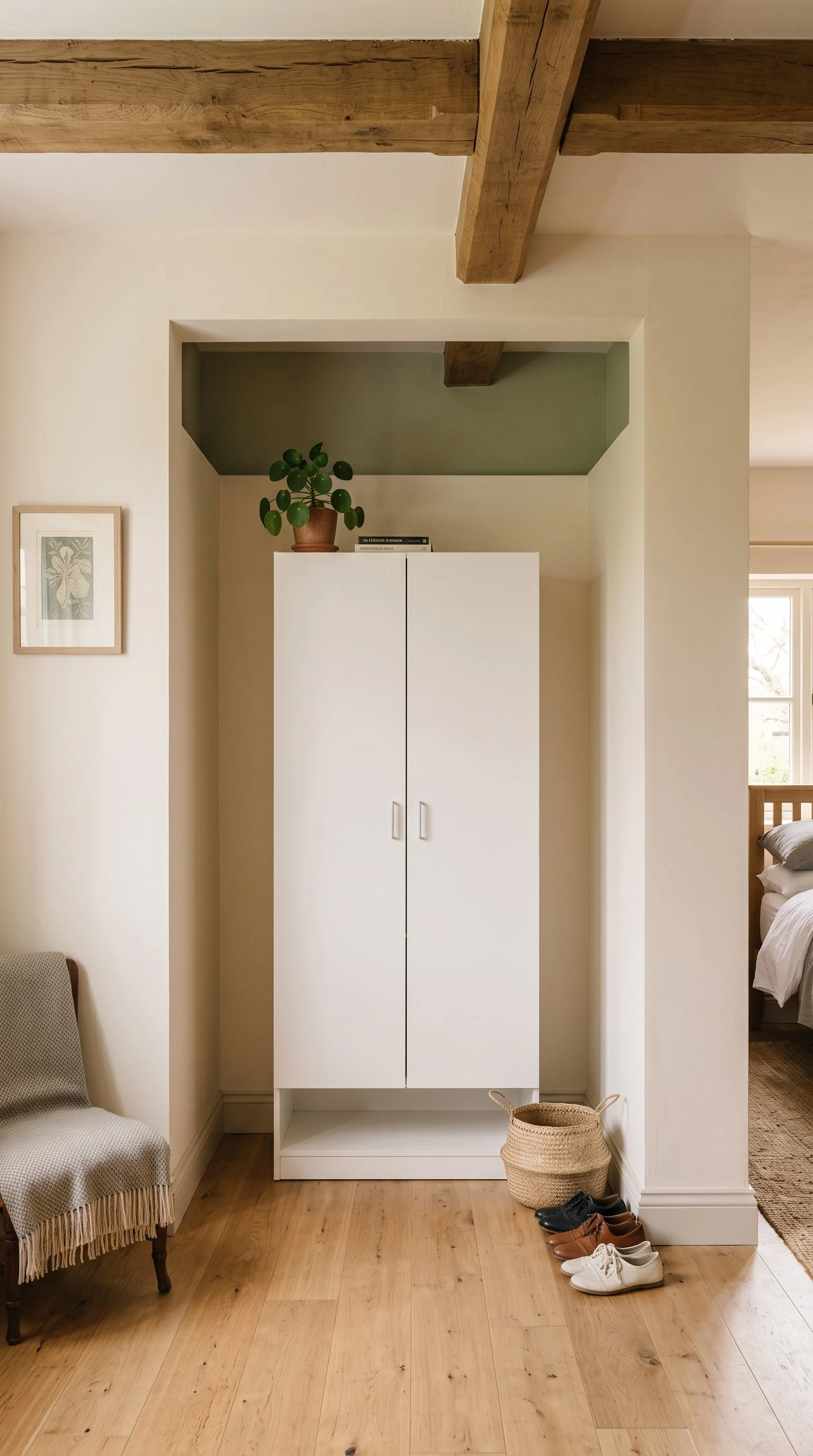
Across a typical wardrobe wall, fit compromises commonly cost you a quarter to a third of the available volume. You didn’t save money on that space. You’re still paying for it, you just can’t put anything in it.
The overflow tax
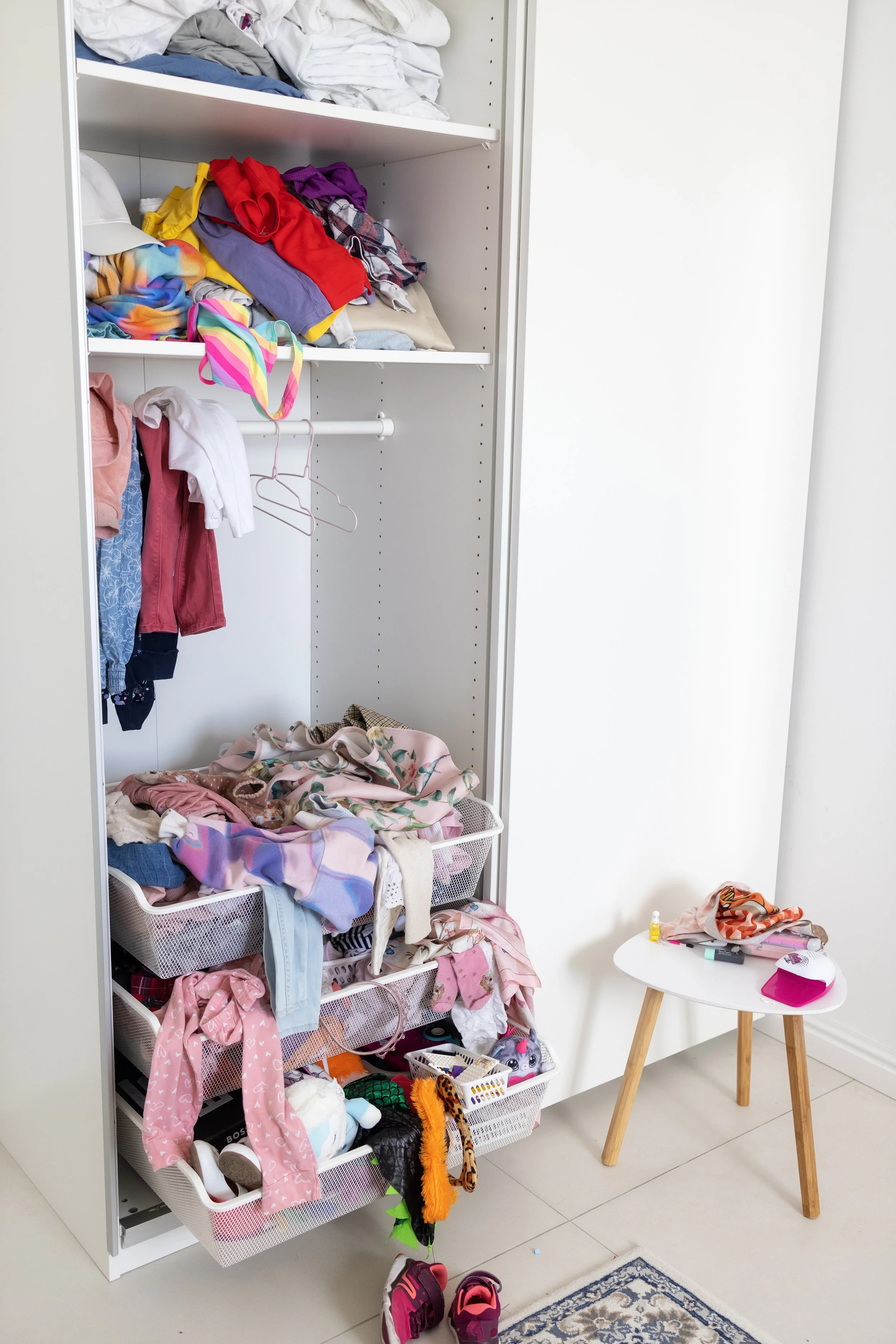
Storage you don’t have in the bedroom doesn’t disappear. It relocates.
First it goes under the bed. Then into the spare room, which slowly stops being a spare room. Then into the garage, which stops fitting a car. Then into a set of plastic tubs, then a chest of drawers you didn’t want, then (for a surprising number of households) into a storage unit at forty or fifty dollars a week.
That last one is worth sitting with. A year of off-site storage costs more than the difference between a flat-pack wardrobe and a properly designed one, and at the end of the year you still own neither the space nor a decent wardrobe.
The cheaper version of the same tax is a spare bedroom that can’t host anyone because it’s full of the things that wouldn’t fit. That’s an entire room of your house, taken out of service by a wardrobe that was not designed for your bedroom.
What it costs to fix it later
Eventually most people do fix it. The trouble is that fixing it later costs more than doing it right the first time. There are more costs to this than just the price of a new flat-pack wardrobe.
Consider the time it takes to pull it apart, flat-pack doesn’t come apart the way it went together. Chipboard tears around cam fittings, so most units get broken up rather than dismantled. Then consider the removal costs. The time and fee of taking a trailer load to the transfer station. Do you even own a trailer? Or is that an extra rental cost? Then think about driving to The Warehouse, or Kmart or Ikea to pick up a new one and the time it takes to decide on which is the nearest to what you need (hint: none are going to be perfect).
Skip all that noise, you simply don’t need it clogging up your life. Cutshop® not only cuts the perfect wardrobe for your room, but they also deliver it right to your door. No stress. No Hassle.
The costs that never look like costs
Some of it never converts to dollars at all, and it still counts.
There’s the daily friction: the door that catches, the drawer you have to lift to close, the shirt that comes out creased because the hanging bar is 80mm too low. Small things, but you have to deal with them every single morning.
There’s the moisture risk, which is a real one in a lot of older NZ bedrooms. Standard chipboard against a cold south wall or a wall shared with the bathroom will swell at the base and never go back. Clothes stored in a wardrobe with no air movement pick up the smell of the room. Depending on your style, replacing moldy clothes can cost even more than replacing the whole wardrobe.
And there’s the sale. Bedrooms photograph and present on their storage as much as their size. A wardrobe wall that runs floor to ceiling and finishes flush shows a finished, considered room. Three mismatched flat-pack units and a stack of tubs reads as one more job for the buyer, and buyers price that in far more harshly than it would cost to fix.
Doing it once
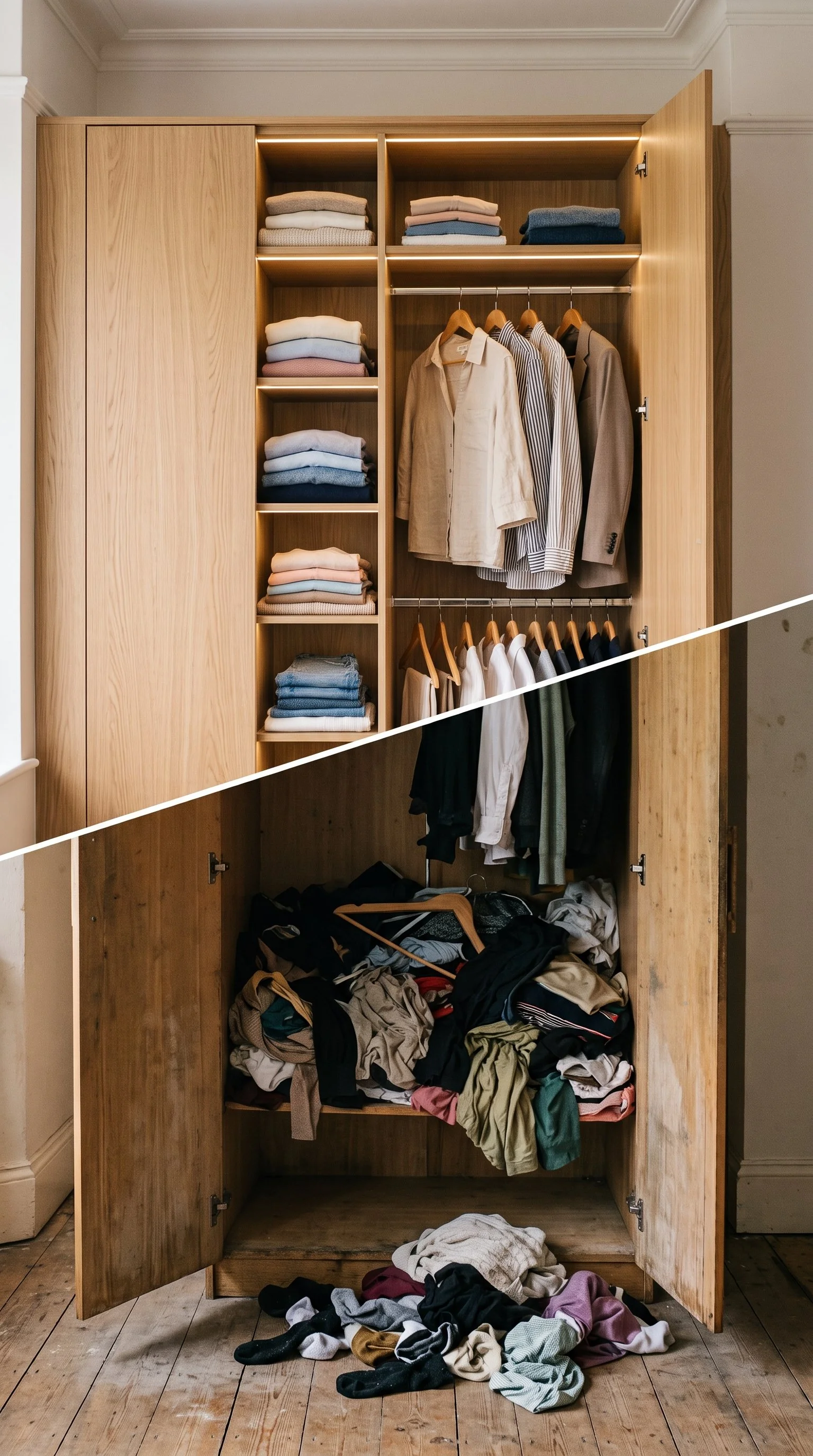
The reason most people don’t do it properly the first time isn’t that they don’t want to. It’s that the alternative seems unaffordable. A joiner, a five-figure quote and a ten-week wait, nobody wants to spend that on a bedroom.
But there’s a middle option that skips both problems. Cut-to-size panels come off a CNC machine to the exact millimetre of your wall, edge-banded and labelled, ready for you to assemble. You get the fit of custom joinery at a price much closer to flat-pack, because the only labour you’re paying for is the cutting.
Specified sensibly — 18mm board for carcasses and shelves, Melteca faces for durability, HMR MDF anywhere damp is a risk, ABS edging on every exposed edge, full-extension soft-close runners — it’s a wardrobe that’s still doing its job when the third flat-pack would have been going out the door.
The cheap flat-pack wardrobe isn’t actually the cheap option you think it is. It’s just the one where you pay in installments of time, frustration and repurchasing.
Want to know what doing it once would cost?
Take a look at Cutshop®’s custom wardrobe options or upload your drawings, DXF files or cutlist for a quote. If you want to chat about your ideas instead, we'd love to hear from you call 0800 CUTSHOP.
